A few weeks ago, while watching old episodes of Grey’s Anatomy on Netflix before going to sleep, I noticed my right eye felt drier than usual. I tried different tactics to adjust to this and fix my dry eye problem, but none really worked. Then, one morning, I woke up to find this same eye felt kind of sticky. It would improve after a few minutes of heavy blinking but, about a week later, I noticed it felt grittier when I blinked. A few days later, my left eye was starting to show some of the same symptoms, and also was bloodshot. How aggravating. I then discovered some kind of yellow-headed growth on the underside of my upper eyelid of my right eye. What was that? I found that thoughts and worries about my eyes started to interfere with my ability to be fully present in my daily life. I was distracted and less effective than usual.
My eyes are on the mend now. I went to my trusty eye doctor who prescribed a few eyedrops everyday, and the inflammation she discovered is going away. The yellow-headed growth? A benign calcification. So, everything is good, really, and my problem only illustrates a minor inconvenience. Nonetheless, this story illustrates how even one small stressor can negatively influence someone’s life.
Anything requiring a new response can be stressful. Stressors can involve loss, challenge, the anticipation of loss or challenge, or even something positive. In the classic social readjustment rating scale, stressors range in severity from minor (such as a speeding ticket or major holiday) to major (such as divorce or the death of a spouse). Traumatic life events can be even worse.
When we experience stress, our sympathetic nervous systems are activated. Our bodies direct stress hormones such as adrenaline to respond. Salivation decreases, perspiration increases, breathing quickens, heart rate accelerates, digestion slows, blood pressure increases, and immune system functioning lessens. Although this fight-or-flight response often protects us when we face an immediate, tangible danger, it causes problems when chronically activated, as typically is the case with modern stressors. This helps explain why many distressed individuals regularly experience symptoms such as dry mouth, sweaty palms, labored breathing, irregular heartbeat, nausea, high blood pressure, and vulnerability to sickness. Problems such as headaches, depression, and heart disease all become more likely as a result of chronic sympathetic nervous system activation.
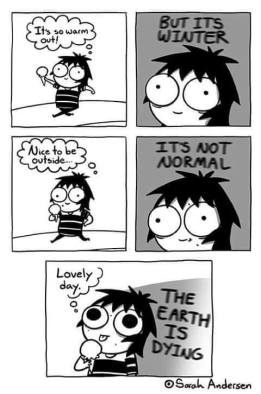 We may be bearing witness to the dawning of a new human experience: “warm weather ambivalence.” This experience may take somewhat different forms in different locations, but in places where there are four seasons, above average temperatures in Fall, Winter, and Spring may yield mixed feelings for some people. The recent unseasonably warm weather across much of the United States is illustrative. On one hand, we are delighted by the warmth as we feel the energy of the sun on our skin and we feel freed from some of the constraints of Winter. On the other hand, some of us sense that something has changed – and is changing – for the worse.
 Andy Tix