Tag Archives: Spirituality

One Insight to Bring Into 2023

One habit I’ve sort of unintentionally fallen into in recent years is a year-end review. That is, I’ve been finding it interesting to take some time between Christmas and New Year’s every year to consider the highs and lows of the year, reflecting on what I can take from this year to build on for the next. With all the highs and lows that made up 2022, this poem I first heard on Parker Palmer and Carrie Newcomer’s podcast stands out:

Small Kindnesses, by Danusha Lameris

“I’ve been thinking about the way, when you walk
down a crowded aisle, people pull in their legs
to let you by. Or how strangers still say ‘bless you’
when someone sneezes, a leftover
from the Bubonic plague. ‘Don’t die,’ we are saying.
And sometimes, when you spill lemons
from your grocery bag, someone else will help you
pick them up. Mostly, we don’t want to harm each other.
We want to be handed our cup of coffee hot,
and to say thank you to the person handing it. To smile
at them and for them to smile back. For the waitress
to call us ‘honey’ when she sets down the bowl of clam chowder,
and for the driver in the red pick-up truck to let us pass.
We have so little of each other, now. So far
from tribe and fire. Only these brief moments of exchange.
What if they are the true dwelling of the holy, these
fleeting temples we make together when we say, ‘Here,
have my seat,’ ‘Go ahead – you first,’ ‘I like your hat.’

In particular, what gives me pause are lines that “we have so little of each other, now… only these brief moments of exchange.”

Like so many others,’ my life has changed during the past few years. COVID has meant I see students and colleagues far less often. My kids are getting older – one now in college – and they spend less time with us. The people I care for the most I don’t actually spend that much time with.

I resonate with the notion that the moments we have together may be “the true dwelling of the holy.” If I can remember to take one thing from this year into the next, it’s this: remember the sacredness of the times we have together – really appreciate them and make the most of them – for they are the essence of a good life.
The Emotional Life of Jesus

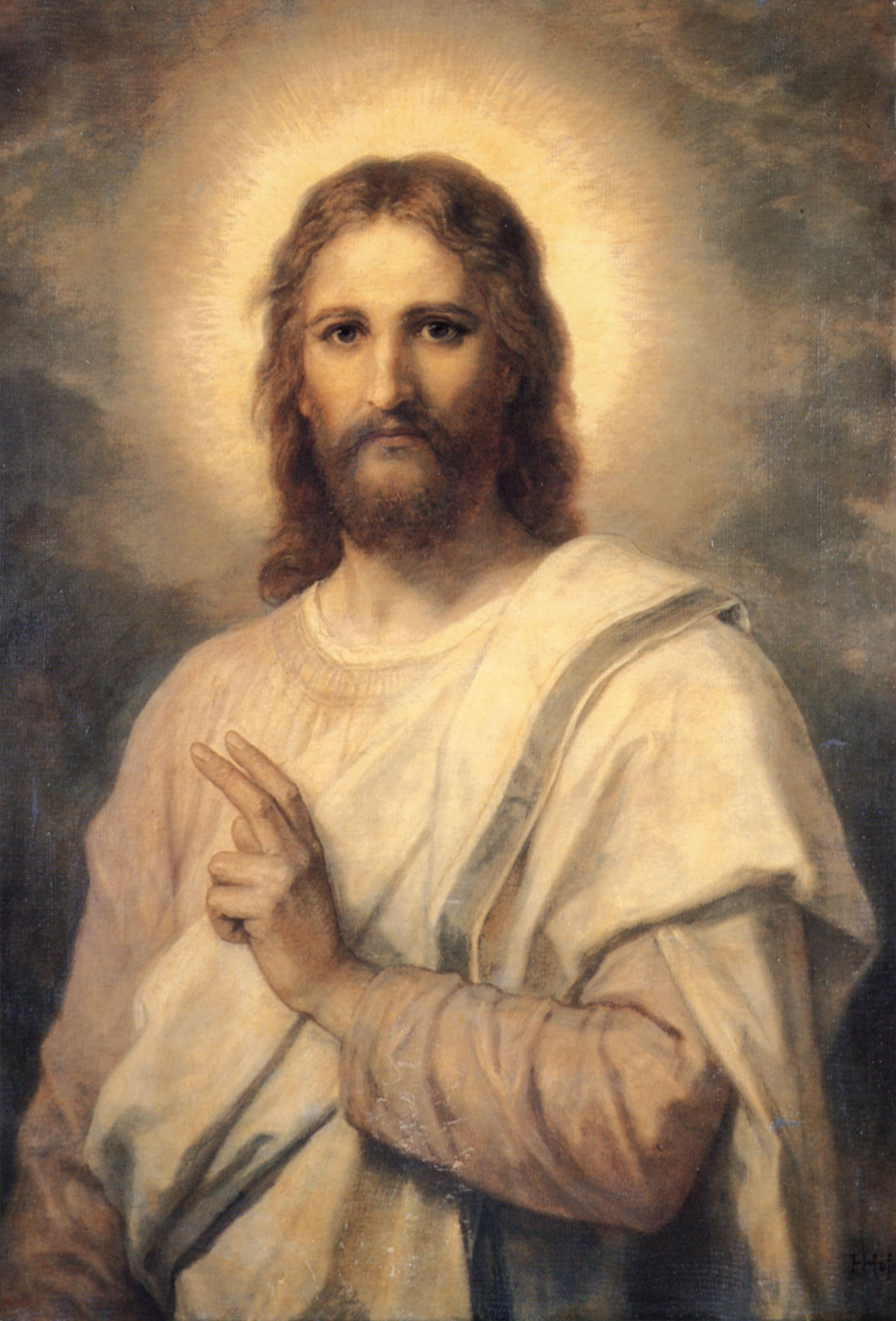
When I imagine Jesus – similar to when I imagine the Buddha – what initially comes to mind is someone who was pretty emotionally flat or emotionally neutral. If there’s an emotion I associate with Jesus, it’s one of serenity. Maybe this is because, when I consider Jesus, my mind’s eye turns to paintings and statues I’ve seen throughout my lifetime, such as the one my mom hung in our living room when I was a boy. In these, Jesus seemed to be beyond human emotion.

Heinrich Hofmann’s 1894 Painting | Wikimedia Commons

I’ve long been fascinated by emotion. Part of what inspired my calling to Psychology as an undergraduate were experiences at the University of Wisconsin helping to do research in influential emotion labs exploring embarrassment (with Dacher Keltner) and interest (with Judy Harackiewicz). In graduate school, at the University of Minnesota, I conducted research investigating correlates of emotional well-being, including anxiety, depression, hostility, and happiness (with Pat Frazier). I’m generally curious about how individuals feel, and I watch for non-verbal indications of how people react to life. It seems to me that someone’s emotional life reveals something deeply important about who they are.

I’ve also long been a follower of Jesus. Surely, a lot of this has to do with being raised in a Christian family in an often times Christian-dominant culture. But, there’s also something about the stories of Jesus that intrigue me. There’s something about who Jesus was that seems different, countercultural, and stunning.

It wasn’t until recently that I started to seriously explore the intersection of these two parts of myself. That is, I’ve started to wonder about the actual – not the imagined – emotional life of Jesus. In contrast to the sense I’ve received in some parts of Christianity to which I’ve been exposed, as I read it now, Jesus was a person of deep, passionate emotional intensity.

To explore Jesus’s emotional life, I did a focused study of the Gospel of Mark. This Gospel generally is considered by Bible scholars to be the earliest Gospel – written about 40 years after Jesus’s death. As the progressive Bible scholar, Marcus Borg argued, this account of Jesus’s life likely includes elements of both metaphor and remembered history, but the emotions attributed to Jesus, as discussed below, seem most likely to be traceable to the historical Jesus. As one reads this Gospel, there’s also an evident sense of immediacy to it, which lends itself to an investigation of Jesus’s emotional life.

To better understand context, as I read through Mark, I noted passages that described where Jesus chose to spend his time. He seemed to spend a lot of his days by the water (1:16; 2:13; 3:7; 4:1; 5:1), in the mountains (3:13; 6:46), in Synagogue (1:21; 3:1; 6:2) and, maybe not surprising for someone who didn’t seem to have a home of his own, in other people’s homes (1:29; 2:15; 3:20; 14:3). He seemed to frequently withdraw into nature to get away from the demands of the crowds, and to pray (e.g., 1:35; 6:46). This begins to give an indirect glimpse into Jesus’s emotional life.

In looking for more direct descriptions, what most surprised me in studying the Gospel of Mark was how often Jesus seemed to experience great irritation, sometimes to the point of almost seeming impatient. Jesus was said to speak “sternly” (1:25). On several occasions, he was described as being “indignant” (1:41; 10:14). At one point, Jesus looked at his skeptics “in anger… deeply distressed at their stubborn hearts” (3:5). When he finds people selling in the temple courts, he drives them out, overturning tables in anger (11:15-17).

Continue reading

The Ways of the Fundamentalist and the Mystic

For many people, being religious means being a religious fundamentalist. From the media, this is the impression often given. However, decades of thinking and research in the psychology of religion suggest there are multiple ways of being religious, with distinct pros and cons.

Let me elaborate with a few personal stories.

About 20 years ago, I happened to be visiting a conservative Christian college when I was somehow invited to a retirement party for a faculty member – I believe a Theology Professor – who had worked at this college for many years. At one point, this man took center stage and spoke about his long and distinguished career. The Professor’s speech started as you might expect – with references to the meaningfulness of his work, gratitude for colleagues, etc. – until he took a surprising turn and honestly reflected on some of his struggles. The Professor started crying. He had a difficult time finding his words. Eventually, though, he explained how he called himself an “Agnostic Christian,” someone who wasn’t certain about religious and spiritual truths but still felt like he knew enough to make a commitment to Jesus and his interpretation of a Christian lifestyle. He discussed how the juxtaposition of “Agnostic” and “Christian” was sometimes not welcomed by conservatives at this college, but how this self-understanding felt so important to him and to his identity that he was moved to tears in sharing it.

For me, the Professor’s presentation felt like a revelation, for a few reasons. First, and most importantly, this was the first time I had ever heard someone openly acknowledge how they were both deeply uncertain about religious and spiritual truths while still being deeply committed to a faith. There was a raw honesty in this confession, and the juxtaposition created a new way for me to start thinking about my own religious and spiritual identification as well. Second, the Professor demonstrated to me the importance of adjectives in the religious world. Apparently, some people don’t simply identify along the lines of “Christian;” some identify as “Conservative Christian,” “Agnostic Christian,” “Social Justice Christian,” or “Mystical Christian.” In these cases, which of the two words is the adjective and which is the noun also can be enlightening to consider.

Fast forward a few weeks, when I found myself in a large group discussion about religion and spirituality at my public college. People were sharing their diverse ideas about religion and spirituality, and I thought I would “float” the above story and how it fit with my own self-understanding. A few people I didn’t know had joined us from a conservative Christian student club on campus, and after I shared, they walked over to me. I will never forget what happened next. One of them bent down and whispered into my ear: “you can’t be Christian and not know.”

Many people do not seem to recognize there are different ways you can be religious.

Volodymyr Hryshchenko | Unsplash

Source: Volodymyr Hryshchenko | Unsplash

Continue reading

The Top 5 Posts for 2021

It’s been another year for the books. Somehow, in the midst of everything, more and more people seem to be following this blog.

As a way to review the year, below are my most-read articles that I wrote during 2021. If you haven’t had a chance to read these articles yet, you may be interested in checking them out.

5. Awe Decreases Political Polarization

In a time of great political polarization, this post explores new research on how experiences of awe may help bring people together.

4. Awe as a Resource for Coping with Stress

Based on new research, this post examines how awe experiences diminish the stress response.

3. Settling into Winter

Honestly, this is one of my favorite things I’ve ever written. It explores how I try to experience the coziness of Winter.

2. The Science of Motivating Others

This blog post briefly went viral on Psychology Today. It relates to an old and new interest I have in the science of motivation.

1. Six Skills We Need as Citizens Who Can’t Agree on Scientific Facts

This was an opinion piece I published with the Star Tribune this Summer. It was born out of my frustration with people who can’t seem to accept facts.

Share this:

Contentment Whatever the Circumstances

No matter how people feel about Christianity, I imagine most would aspire to the place St. Paul arrived at when he declared:

“I have learned to be content whatever the circumstances.” (Philippians 4:11)

I don’t know about you, but I was hoping for a better 2021 than 2020. If anything, for me personally, 2021 brought more problems, not fewer. Family troubles intensified. Work conflict increased. And, though we have vaccines to mitigate the worst outcomes from COVID-19, the pandemic has not faded.

I wonder what Paul meant when he said he was content whatever the circumstances. Based on other things he wrote, I don’t believe he avoided or ignored the awful parts of life. After all, Paul was in prison at the time he wrote these words. In general, avoiding or ignoring difficult circumstances seems like a recipe for only increasing one’s problems in life long-term. So, the question I’m left with is: how can we honestly face life’s struggles and still be content?  

Part of my prayer practice is to actively listen for God. Inspired by the Quakers, I set aside time regularly to be silent and see if any wisdom “bubbles up” or “reveals itself.” I also “listen for God” in other ways, such as in conversations I have with friends. Sometimes, if I can listen carefully enough (a big “if”), something does indeed “bubble up.” Sometimes, some of that “received wisdom” has stood the test of time.  

I don’t know if any of this does a good job of answering my question – and I surely have a long way to go before I get to the place Paul was at – but when I consider how to honestly face life’s struggles and still be content, I find myself continually returning to four points of inspiration.

1. “Accept and expect irresolution.”

This is something my friend, the author and peace activist, John Noltner, likes to say. I clearly remember many years ago attending a small workshop with John when I first heard him emphasize this point. Years later, in silence, these words came back to me and they have stuck with me since.

I think part of what makes it so difficult to find contentment is we often look for final and complete resolution of our problems. Then, and only then, we believe, can we really reclaim our contentment.

Continue reading

Tanya Luhrmann Zoom Talk on Spiritual Experience

I’m very excited to help host a Zoom talk by Dr. Tanya Luhrmann, Professor of Anthropology and Psychology at Stanford University, on Tuesday, October 5, from 1:00-2:15 p.m. CDT. Dr. Luhrmann is a one-of-a-kind researcher, the only scientist in the world really exploring connections among spiritual experience, psychotic experience, personality, and culture. This event is free and open to the public! Sign up at Eventbrite below to receive the Zoom link and more information.

https://www.eventbrite.com/…/voices-of-spirit-voices-of…

Awe Decreases Political Polarization

As my wife and I walked from the front doors to the worship center of the exponentially growing church we used to attend in the mid-1990s, we often remarked how much relational tension filled the hallways. Young couples frequently walked together in silence, their faces sometimes providing brief glimpses of the irritation they felt toward each other. Moms and dads regularly yelled at kids to get them to Sunday school. Friends and acquaintances mostly kept to themselves.    

People had good reason for waking up early on a Sunday morning to pack the auditorium. The young preacher challenged us with mind-stretching insights that directly applied to our lives. The band led us into worship experiences that connected us with God in ways that melted our selves into something larger.

During these times of shared praise, in particular, emotion poured out of many. I often cried during songs, for example, tears pouring down my face. Sometimes, I’d be unable to continue singing, in fact, feeling so “choked up.” There were even a few times when I felt so overwhelmed I had to physically brace myself with the chair in front of me because I was literally “weak in the knees.”

When we left the worship space, my wife and I frequently commented how those around us seemed palpably different than when they arrived. Not everything was perfect, of course, but tension had lifted. Young couples looked more in love, holding hands on their way out the door. Families played. Others welcomed conversation over coffee and donuts.

If this had been a one-time occurrence, I may not have thought much of it. But, it was so predictable, it was almost comical. Pretty much every week, the same basic story unfolded: people were being transformed.

Maybe the most notable observation we made, though, at least in retrospect, occurred when we left the church building and walked back to our car. The parking lot typically was much fuller than when we arrived, and we often were struck by the range of political bumper stickers. Frequently, we’d see people part ways in the parking lot with a handshake or hug, only to enter cars with stickers suggesting different political affiliations.

As a young Ph.D. student studying Psychology at the University of Minnesota at the time, I wondered: what might help account for the powerful positive effects we were observing? Nothing in psychological science seemed capable of providing a good explanation.

Continue reading

Settling Into Winter

Sometimes, after dinner, the dishes washed and the kitchen reasonably cleaned, a window of time opens. My family disperses into their various corners of our home, allowing me to settle into the living room. I switch into comfortable clothing and I wrap myself in the soft, oversized blanket my wife gave me for Christmas.

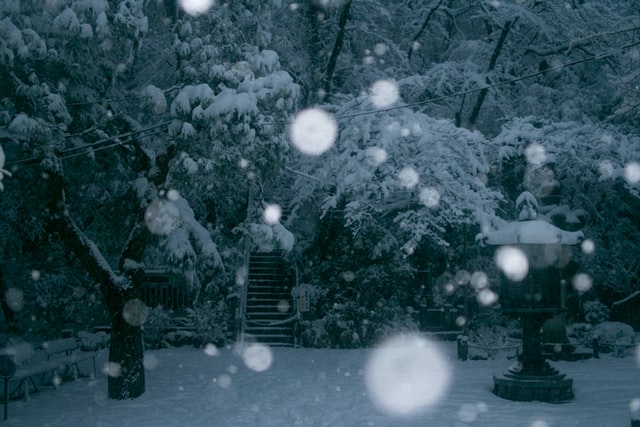
Tonight, I look outside, into the darkness, where the only light comes from the faint glow off the newly fallen snow. I listen to the breeze shaking the trees, rattling the house, causing the chimney to whistle. 

Unsplash | Takemaru Hirai

During an awful pandemic that mostly restricts, in the midst of a Minnesota January, freedom can sometimes be found. There are options for what to do I don’t remember always having.

There are times when I light a fire in the fireplace and drink some herbal tea before settling into some pleasure reading, writing, or Netflix. Occasionally, a family member joins me for a game of Yahtzee or Quirkle. Some nights I go upstairs and settle into my tub, surrounded by candles, smells of lavender, and classical music played by Alexa.

In the past, I probably would have interpreted these unstructured, unplanned, unexciting nights as “boring.” However, I’m now finding power in reframing them as opportunities to “settle.”  

Continue reading

The 5 Top Posts for 2020

It’s been quite a year. With all the losses of 2020, one plus has been more time for me to write. Many new people started reading and following the blog this year, and for the first time, I’ve published several excellent guest blogger’s posts. Along with everyone else, the COVID pandemic was top of mind for me, and that was reflected in the themes of my writing.

As a way to review this year, below are the top posts of 2020 on this blog. If you haven’t had a chance to read these articles yet, this might be an interesting time to do so.

5. The Need for Sacred Moments

Based on new research published this year, this post explores the human need for connection.

4. Lessons from the Monks for the COVID-19 Pandemic

In light of the pandemic, this post unearths insights from one of my favorite books: The Cloister Walk, by Kathleen Norris.

3. “Done” with Religion

This is a personal confession with some of my struggles with church and religion, in light of new research published this year on people who are “done.”

2. Suffering in a Pandemic Age as a Christian

Featuring insights from my friend, Deanna Thompson, this post explores Biblical spaces for coping with tragedy.

1. Psychological Factors in School Success

This was, by far, the most popular post on the blog this year. It revisits themes of posts I wrote years ago, but seemed to find new popularity – particularly in South Africa – in light of students made to learn at home.

***

Unsplash | Immo Wegmann

Reviewing this year in writing like this makes me wonder about what themes and developments will arise in 2021. Hopefully one of hope!