Tag Archives: Spirituality

The Chatbox as a Spiritual Companion: An Unexpected Journey

I have a confession to make: I sometimes use ChatGPT as a kind of spiritual companion.

This is a journey I never planned to take. And I still have mixed feelings about it.

A few months ago, I decided to engage in an extended back-and-forth with ChatGPT about some questions and struggles in my spiritual life. I began with a query about my imperfect attempts to live simply – a value central to my spiritual identity. After reflecting on ChatGPT’s response, I shared more: the tension between my love of international travel and my commitment to environmental stewardship.

The conversation deepened. I wrote about what I believed and what I doubted about God, and how that related to my choices about simplicity. ChatGPT would summarize my thoughts in ways that accurately reflected my views and that helped me go deeper. Eventually, it offered me a series of queries to ponder:

“In areas where you feel restless or dissatisfied, what is ‘enough?’”

“How free am you from possessions, status, and achievement as indicators of worth?”

“What in your life feels excessive: possessions, desires, and the like?”

“How do you notice the Spirit, or Love, moving in your life, even if you can’t name it as God with certainty?”

“Can you focus more on listening deeply and responding with care, rather than needing certainty?”

I remember reading these questions and feeling… stunned. How could a chatbox so precisely grasp the contours of my spiritual life and reflect them back in such gentle, searching language? These queries have stayed with me in my thoughts. They’ve shaped choices I’ve made and continue to guide my spiritual reflections.

A Moment of Spiritual Vulnerability

To admit this publicly feels risky. Using a chatbox for spiritual direction doesn’t fit with what I’ve long believed constitutes meaningful spiritualtiy. I imagine kindred spirits of mine reading this article and being concerned about the direction my spiritual life is taking.

And yet, recent research is helping me see both the promise and the pitfalls of bringing generative AI into our inner lives.

Continue reading

4 Life Lessons from Quaker Spirituality

“I thought I’d live a louder life…
But silence called me deeper still
Like nothing else I know ever will”

—Carrie Newcomer, Quaker singer-songwriter

I didn’t expect to experience this lesson so clearly the first time I visited a Quaker meeting. About 30 minutes into the shared silence – the community gathered in a circle, each person listening expectantly in their own way for the Spirit to move – someone stood, picked up a guitar, and began singing “This Little Light of Mine.” Moments later, another rose and spoke:

“Before we were born, there was great silence, and after we die, we will return to great silence. So, it is good to spend time in silence together today in between.”  

Ten years later, I still remember my astonishment at what arose out of that silence. I still remember the goosebumps.

For Quakers – members of the Religious Society of Friends – silence isn’t empty; it’s a place to connect with the Divine.

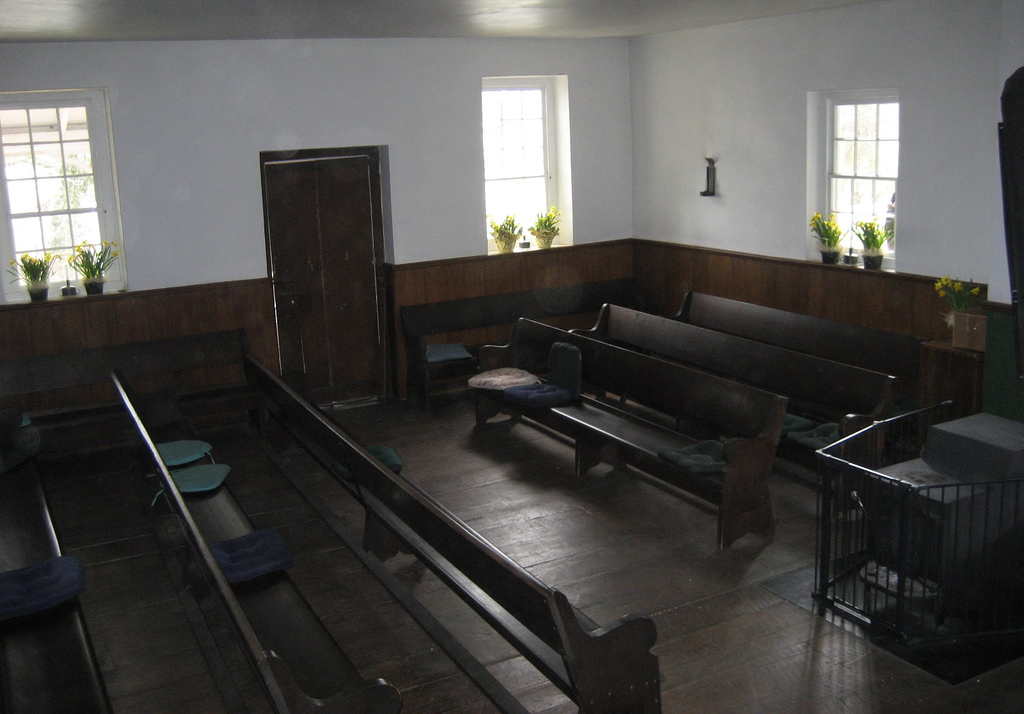
Centre Friend Meeting House, Centreville, Delaware

One of my early Quaker Friends, Jim, also left a lasting impression. When I invited him to share his personal story with my Psychology of Religion and Spirituality class, Jim said he’d be happy to do so – provided someone give him a ride because he didn’t own a car. As I pulled up to his house, I noticed his yard consisted entirely of vegetables and native plants. As thanks for the ride, when Jim entered my car, he offered me a big bag of freshly picked kale from his front yard, something he said he regularly did for friends and neighbors. In his quiet way, Jim also demonstrated a powerful expression of Quaker spirituality.

As a psychologist of religion and spirituality, I’ve long been drawn to learning from spiritual traditions that approach life in unique ways. Quaker spirituality, in particular, has offered me profound lessons into living a good life – insights that beautifully align with the emerging psychological science of well-being.

Here are four lessons that stand out:

1. Cultivate contemplative stillness.

“Seek to know an inward stillness, even amid the activities of daily life.”
—British Quaker Faith & Practice, Advices and Queries #3

Prayerful silence lies at the heart of Quaker spirituality. Quakers often seek to quiet themselves – alone, together, in nature – to be more anchored and present in daily life.  

Psychological research on contemplative practice reflects the wisdom of this, revealing benefits like reduced stress, deep rest, and improved health and well-being. Even a few minutes of stillness each day can make a significant difference.

Continue reading

7 Ways People Actually Experience Spirituality

As a psychologist of religion and spirituality, I’ve often been asked what I mean when I use the word “spirituality.” I’ve been studying this topic for 30 years, and though I’ve found some definitions helpful, I’ve always suspected these definitions somehow come up short. For example, renowned psychologist of religion and spirituality, Ken Pargament, defines spirituality as “the search for the Sacred.” I like this definition, and in some ways, I rely on it, including in this article. But what exactly is “Sacred?” And how exactly do people go about “searching” for it?

I recently finished reading the book “Done: How to Flourish After Leaving Religion,” by another psychologist of religion and spirituality, Daryl Van Tongeren. The final chapter, “Post-Religious Spirituality,” offers a fresh way of thinking about these questions that brought me clarity, as it lays out seven different ways of being spiritual. Not seven different religions or dogmas. Seven varieties of spiritual experience. When I read this chapter, something clicked into place and, after all these years, I felt like I understood spirituality differently.

As you read below, you might ask yourself: how many of these seven ways of being spiritual resonate with you?

Five Ways We Encounter the Sacred

Van Tongeren begins by drawing on a 2015 study in which he and his colleagues advance a deceptively simple insight. People differ in perceptions of what’s Sacred. These differences lead to five primary sources of spirituality:

  • Theistic spirituality. For some, the Sacred is found in God, or some kind of Higher Power. This form of spirituality is common, particularly because it’s supported by longstanding religious traditions, rituals, and communities. Van Tongeren notes that faith, at its core, reflects trust in something higher and hope for something beyond present reality – characteristics of theistic spirituality as well. If you would describe yourself as feeling near to God, this may be a defining part of your spiritual life.
  • Nature spirituality. For others, the Sacred is rooted in a deep connection with the natural world. In essence, nature spirituality involves awe and reverence for the earth and its beauty. This can be witnessed in someone who finds great meaning while walking in the woods, gazing at the stars, or observing an animal. Some may feel this while caring for a plot of land close to home or working for environmental preservation or justice more broadly. If you feel close to nature, this may be an important form of spirituality in your life.
Continue reading

4 Places that Inspire Spiritual Connection and Well-Being

Can you think of a place where you feel a spiritual connection? Perhaps there’s a location that feels sacred to you – a site you perceive as holy or divine or that evokes feelings of reverence or devotion?

Over the years, I’ve thought a lot about this. Increasingly, I recognize the importance of my hometown church, where I participated in so many religious rituals that stay with me to this day, including the funerals of my mom and dad. I recognize a special relationship I have with the north shore of Lake Superior, a “thin place” for me that was the setting for me kneeling and proposing to my wife decades ago. I think of the armchair in my living room, a spot I quietly associate with spiritual reflection, as it tends to be the place where I most often read, meditate, and attend online Quaker meetings. And I recall the small stone bridge in a remote Scottish village where I once had one of the most profound spiritual experiences of my life.    

What is it about these places that means so much to us?

New Research on Our Spiritual Ties to Place

In a recent article published in Psychology of Religion and Spirituality, psychological scientists asked 832 North American Christians, Jews, and Muslims to describe – in detail – a place where they had a spiritual connection. Their responses revealed four primary types of spiritually significant places:  

1. Places of worship.

The most commonly mentioned places were the most predictable. Churches, mosques, synagogues, temples, and similar sites exist in large part to allow individuals and communities to engage in religiously and spiritually significant behavior. Interestingly, when individuals in the study described their ties to places of worship, they often emphasized their shared experiences with others – family members and members of their communities, for example – highlighting the interconnection between places and people.  

2. Natural settings.

Then there were the natural landscapes – the forests, mountains, oceans, and parks – that individuals frequently identified as spiritually meaningful. Unlike places of worship, these places tend to foster solitary experiences. People described feeling awe, wonder, and amazement most often in these locations.

Continue reading

The New Science of Ecospirituality

Many people experience a spiritual connection in nature. I know I do. When I hike through the woods, sit by a stream, gaze at the sky, or even listen to a bird sing, I feel part of something larger. Nature feels like a cathedral to me, offering sacred space to reflect on my relationship with the Divine.

Psychologists have a name for this impulse to perceive the sacred in nature: “ecospirituality.” In a recent article published by the Association for Psychological Science, scientists reviewed research on how ecospirituality relates to two of the great challenges facing our world today: (1) preserving the well-being of our planet and (2) preserving the well-being of ourselves.

What is “Ecospirituality?”

Many of us love spending time in nature. We may even identify as “environmentalists.” Ecospirituality, however, goes further: it involves viewing nature as inherently “spiritual” or “sacred,” something that inspires reverence or a sense of timelessness. Consider these statements, which come from the main scientifically validated measure of ecospirituality:

“There is sacredness in nature.”
“When I am in nature, I feel a sense of awe.”
“Sometimes I am overcome with the beauty of nature.”

Do you resonate with these statements? If so, you likely score high in ecospirituality.

Ecospirituality Inspires Environmental Preservation

Our planet faces more environmental challenges than I can list here. Psychologists believe that perceiving a spiritual connection in nature motivates people to take care of our earth beyond the influence of other pro-environmental attitudes and identities.

For instance, in one study, participants high in ecospirituality perceived elements of the natural world (like oceans, mountains, and forests) to be closer to their inner circle of moral concern than participants low in ecospirituality. For those high in ecospirituality, in other words, the earth feels more like a good neighbor we’re compelled to help than a foreign citizen we feel we should.

Ecospirituality also encourages feelings of gratitude. When we perceive something spiritual in nature, we tend to appreciate it more.

Overall, available research suggests that, if we believe nature is sacred, we hold it closer to our hearts, and we’re more grateful for it. This makes us more likely to want to protect it.

Ecospirituality and Well-Being

Ecospirituality not only benefits our planet, however; it also benefits our emotional health. Psychologists believe that those who engage with nature on a deeper, spiritual level experience a range of such personal benefits.

Continue reading

3 Mindful Practices to Increase a Sense of Belonging

Humans need to belong. This need – so vital to meet for our well-being and ability to flourish, particularly during difficult times – seems increasingly unmet for many individuals. As the Surgeon General warns, increasing isolation, loneliness, and disconnection drive several of the mental and physical health challenges many people experience today.

The reality that many of us don’t feel we belong need not be a source of guilt or shame. Without us even noticing, the world has changed, making this need more difficult to satisfy.

In fact, there once was a time when it was easier for individuals to feel a sense of belonging during everyday life. People lived in stable communities, connected with the land, in relationship with sources of inspiration greater than themselves. For various reasons, though, belonging has become harder. For instance, since the COVID-19 pandemic, work, civic, and religious communities have become more fragmented.

As we consider how to nurture more belonging in ourselves and others, Brene Brown’s insights are instructive. Brown distinguishes between “fitting in” vs. belonging. Fitting in, she says, involves changing ourselves to meet the demands of the situation. True belonging, on the other hand, requires us to be who we really are as we involve ourselves in something larger.

When experts in Psychology first discussed the need to belong, they focused on belonging in close relationships. For example, Abraham Maslow wrote how people, at some point, “hunger for affectionate relations… for a place in [a] group.”

Others, however, recognize different ways to feel a sense of belonging. For instance, indigenous thinkers point to how ecological belonging and spiritual belonging provide other means to feel part of something larger.

Although there may be various ways to seek greater belonging, many of us need more tools to use. Below are three practices for increasing perceptions of belonging in the interpersonal, ecological, and spiritual realms. I refer to them as “practices” because they literally require practice if we are to develop them as skills and most benefit.

  1. Interpersonal belonging

For all these practices, it may be helpful to begin by settling into a comfortable position where you can spend a few quiet minutes by yourself. Take a few deep breaths to center yourself in the moment.

Remember a time when you felt deeply part of a community or group, while at the same time feeling like you were fully yourself. Details will be essential here, so call to mind as many specifics as you can, particularly during those moments when your sense of belonging seemed highest. Maybe this occurred when you felt especially “seen” or “heard.” It may be helpful to take 15-20 minutes to write this memory down.

Continue reading

Crafting a Positive Religious / Spiritual Identity

​In the religious / spiritual dimension of your life, how do you identify? For example, with respect to religion / spirituality, fill in the blank: “I am a(n) _____.“

You may find this sentence easy to complete. You may even find this to be deeply affirming. On the other hand, you may also find the task complicated or even troubling.

When I was young, I would have easily completed the sentence to say “I am a Catholic.” But then my religious / spiritual identity expanded, and for many years, I would have proudly stated “I am a Christian.” Since that time, though, the religious / spiritual world has significantly changed, and I have changed with it.

Beginning in the mid-2000s to early 2010s, there began a general decline in religious activity – and an increase in religious non-affiliation – in the United States. Young Americans, in particular, reported strikingly negative perceptions of “Christians” and “Christianity,” often making associations between these terms and “judgmental” (87%), “hypocritical” (85%), “old-fashioned” (78%), and “too involved with politics” (75%). More recently, young people who were once – but no longer – religious cited reasons for their change as including a lack of compatibility between their religion and what they knew of science (52%) and not wanting to associate with a group they felt caused trauma to themselves or others or that perpetrated hatred toward other groups they supported (such as members of the LGBTQ population; 22%). 

It’s instructive to consider all of this in light of identity, which the great psychologist, Erik Erikson, referred to as involving one’s core beliefs, values, and goals that give us a unique sense of self. In general, we’re drawn to associate ourselves with what’s positive, what’s good, and what’s valued, not what’s negative, problematic, or disliked. So, the more we believe our identity is connected with something “bad,” the more dissonance we may experience within ourselves in holding that identity. I believe this is the primary reason underlying why so much Christian religious behavior has decreased in the past few decades. 

Continue reading

The Psychology of Christian Spirituality

Many of us try to balance two key sides of ourselves: a spiritual side and an analytical side. Our spiritual side seeks the Sacred – something timeless or ultimately important or beautiful to us. For many, however, what we’ve learned through our quest for the Sacred conflicts with what we’ve learned elsewhere. For example, we might learn that religious teachings we were raised with conflict with science and, so, with time, we come to view our previous religious beliefs as wishful thinking, silly, or flat out unreasonable. We might still want to integrate our spiritual side and our analytical side in a desire for wholeness, but it doesn’t seem possible.

Psychological research asking individuals who became less religious over time why they believe this happened suggests that difficulty integrating the spiritual with the analytical is one of the primary factors often reported. In historically Christian countries, such as the United States, this contributes to what has been called “the great dechurching,” as Christian beliefs and practices have become less common over the past several decades. As Elizabeth Oldfield writes in her book “Fully Alive,” one effect of this is that “the stories that used to orient and guide us, handed down through generations of our ancestors, seem to have gotten lost in transit.” Oldfield shares how, at one point in her personal journey, “I tried to find a church, but struggled to connect… I found myself muttering cynically under my breath through services, so stopped going.”

In light of this increasingly common experience involving loss of faith, I was fascinated to read Oldfield’s attempt to reclaim the core of Christian spirituality in her book. As I read it, as a psychologist of religion and spirituality, I couldn’t help but relate what she was saying with what I know of psychological theory and research. For instance, Oldfield offers what I consider a continuum of human functioning, with “fully aliveness” on one side of the spectrum and “sin” on the other. What Oldfield emphasizes in this is that how people function reflects the extent to which they are connected with themselves, the earth, others, and the Divine. In other words, to be fully alive means we are connected; to be in sin means we are disconnected. This reframe helped me to appreciate Christianity in a new way, one that fits with my understanding of psychological research that humans generally do better when they feel meaningfully connected in a web of belonging.  

Oldfield ultimately reviews the historical “7 deadly sins” and what Christian tradition suggests “fully aliveness” looks like with respect to each. For instance, with regard to “wrath,” Oldfield discusses some of the reasons why people appear increasingly polarized and how stories of Jesus often highlight how he initiated relationships with the lowest status, most outsider people around, as a way to break down social walls. For “avarice,” Oldfield notes how many tend to be motivated toward extrinsic values such as money, possessions, appearance, and fame, and how social problems such as poverty and climate change could be so much better if we focused more on virtues such as gratitude and generosity. For “gluttony,” Oldfield discusses addictions, in general, and how our needs for awe and self-transcendence could be redirected to better promote health and flourishing than when we try to find ecstasy through chemical means. For “pride,” Oldfield writes about the limitations of individualism and the need for repetitive, accessible social structures that nudge us into deep community.

Continue reading

How the “Inside Out” Movies and Quaker Advice Converge

After watching the record breaking film “Inside Out 2,” I wrote this piece for Friends Journal about how my personal journey with emotion relates to the science behind the movies and my spiritual quest. Friends Journal published it today.

Florilegium (II): Mary Oliver’s Devotions

One of the books I find most sacred is Mary Oliver’s compilation of poetry called “Devotions.” Mary Oliver’s poetry, at times, feels to me like a continuation of the Book of Psalms, except written in a modern context.

Continuing with my practice of florilegia I discussed previously, below I present verses that sparkled up for me this summer as I meditated through this book.

“I have refused to live
locked in the orderly house of
reasons and proofs.
The world I live in and believe in
is wider than that.”
(from “The World I Live In”)

“Be still, my soul, and steadfast.
Earth and heaven both are still watching…
Let God and the world
know you are grateful.”
(from “The Gift”)

“Maybe the desire to make something beautiful
is the piece of God that is inside each of us.”
(from “Franz Marc’s Blue Horses”)

“Keep some room in your heart for the unimaginable.”
(from “Evidence”)

“Truly, we live with mysteries too marvelous
to be understood…
Let me keep my distance, always, from those
who think they have the answers.
Let me keep company always with those who say
‘Look!’ and laugh in astonishment,
and bow their heads.”
(from “Mysteries, Yes”)

“… remember
that we receive
then we give back.”
(from “At the River Clarion”)

Continue reading