Tag Archives: Religion

One Insight from Indigenous Spirituality that Promotes Resilience

On February 1, 2012, American Indian Studies Professor, David Mathieu, received the call that is every parent’s worst nightmare. David’s beloved daughter, Felicity, had suddenly died when her car collided with a semi-truck on an icy, two-lane, highway in rural southern Minnesota. She was only 27 years old.

Like anyone who has lost a loved one like this, David struggled mightily with grief. He wrested with questions such as:

“Should we have done something different that would have avoided this accident? Who was at fault? What did we do wrong? Why did she choose to live in a rural area with dangerous roads? How could this happen? Was she or were we being punished? What was the role of God in this tragedy?”

In the aftermath of this horrific event, David’s long-time study of Lakota spirituality – particularly conversations at the Cheyenne River Reservation in South Dakota with medicine men Sidney Keith and Martin High Bear – took on new significance.

A central facet of Lakota spirituality is the concept of Wakan, translated as “Mystery.” In his book, “Way of Wakan: Reflections on Lakota Spirituality and Grief,” Mathieu explains:

“Wakan is, at its core, an ambiguous, yet very honest, explanation of why we cannot understand a reality we desperately wish we could. Wakan, then, is a spiritual ‘position’ on which to base an understanding of one’s spiritual and physical world as well as the relationship between the two.”

Acknowledging the Mystery of the situation helped David with his initial questions and urge to blame someone or something for his daughter’s death. He elaborates:

“Everyone from the driver of the semi-truck, to inadequate roads in southern Minnesota, to the whole area where she lived, and even to Felicity herself for not paying attention to her driving, not taking precautions, seemingly not caring… Blame has no place when all is Wakan and unknowable.”

What seems uniquely powerful about this reliance on Wakan is the humble recognition that some things are simply unknowable to us humans. To suggest anything otherwise would, in fact, be considered presumptuous. Some things just happen, and desperate as we are to find answers, we can’t really know why. This isn’t just a practical perspective in Lakota spirituality; the lack of knowing itself is deemed Sacred. As David writes:

Continue reading
How Contemplative Practices Promote Health and Well-Being

In a review of everything currently known about the topic, researchers recently developed a scientific model of how contemplative practices of various kinds may encourage better physical and psychological health. Published in Psychological Review, one of the flagship academic journals of the American Psychological Association, this new model advances our understanding of the adverse effects of stress and what can be done to combat it.

The researchers note there are four primary stress-related states we all experience: (1) acute stress (example: arguing with a spouse), (2) moderate threat (example: working), (3) rest (example: watching TV), and (4) deep rest (the least studied of the four, but most beneficial). Although many believe that rest is our baseline, default state, the scientists in this article suggest that, in the United States (and, by extension, in other developed countries), most adults now spend most of their daytime hours in moderate threat arousal, which drains of us of the restorative energy we need to function at our best. In fact, considerable research conducted over many decades demonstrates that this level of chronic stress contributes to various physical and psychological health problems ranging from heart disease to immune suppression, from chronic pain to depression. Individuals from marginalized groups seem particularly likely to experience this degree of toxic stress, helping to explain some of the health inequities we observe in certain groups such as people of color and individuals with poor economic resources.

Whereas acute stress and moderate threat cause sympathetic nervous system activity, deep rest is characterized by the dominance of the parasympathetic nervous system. The parasympathetic nervous system basically calms us. The researchers in the Psychological Review article further speculate that deep rest may be uniquely restorative at a cellular level. In this way – though there are surely limits – deep rest may be physically and psychologically “healing.”

Although there may be several activities that promote deep rest and enhance the body’s restorative capacity, most emphasized in the article is how contemplative practices may play a unique role. As noted by the authors, “contemplative practices are mind-body exercises that are intentionally practiced to work toward inner well-being, psychological flourishing, and deep connection with self, the world, or a higher power.” Examples of such practices include deep prayer, chanting, meditation, yoga, Tai Chi, and Qigong.

Continue reading

Rediscovering a Religious or Spiritual Life

Many of us are frustrated by religion. According to the General Social Survey – a large, representative survey done every few years for the past several decades – the number of Americans who say they have no religion increased from 5% in 1972 to 29% last year, for example. The COVID-19 pandemic also provided a pause from religious attendance that allowed many of us to take a step back and reconsider how we really feel about our religious beliefs, practices, and commitments.

Why are so many people “done” with religion? Researchers in one study asked individuals who said they were once – but no longer – religious to write about their primary reason for the change. By far the most common reason (52%) was intellectual, such as when a person felt their previous religious beliefs conflicted with science or logic, or when they felt they simply “outgrew” their old beliefs. Another common reason (22%) was because individuals said they didn’t feel they could be a part of an institution they felt caused trauma to themselves or others or that they believed perpetrated hatred toward certain groups, such as members of the LGBTQ population. A third reason (15%) was because people experienced personal adversity they couldn’t reconcile with their religious beliefs. Finally, some (11%) noted social reasons, such as feeling like they didn’t “fit in” with a religious community.

Research suggests “religious dones” tend to have a history of religious and spiritual struggles but that these struggles often lift when they form a non-religious identity. On the other hand, studies show how, in religious settings and groups, formerly religious people often hide their newfound beliefs and values, again feeling a lack of belonging. In addition, a good deal of research points to the significant positive resources provided by religion and spirituality. Relinquishing these resources may come with some long-term costs. For instance, doing away with all of our religious and spiritual customs may mean our children do not experience several significant rituals or rites of passage that aid in their development.

It’s not healthy to suppress our struggles with religion. Are there ways to be honest with our frustrations while still pursuing a religious or spiritual dimension to our lives? Below are five ideas for how we might do so.

1. Go deeper into religion.

Sometimes, there are resources in our religious traditions that can help us work through our frustrations. For example, many religions have insightful analyses of how faith and science can be integrated. Traditions frequently have resources for helping us reconcile the suffering we’ve experienced with our religious beliefs. A deeper exploration often points to how our religious frustrations are rooted in how religious teachings are commonly interpreted and practiced – frequently by people less informed – instead of the best a religion has to offer. In this way, digging further into religion can be the spark for personal growth and deeper understanding.

Continue reading

5 Ways Religion Is Better than Spirituality

I’ve taught a course in the Psychology of Religion and Spirituality for about 20 years. As part of this course, I often invite speakers to share their religious and spiritual life stories and insights with the class. One of the most provocative perspectives ever shared came from a Jewish speaker. To paraphrase, he would say:

I know many of you consider yourselves more spiritual than religious, and I know there are many benefits to personal spirituality. However, I have a different take on this. I believe religion is better than spirituality. And I believe this is increasingly so.

The Meaning of “Religion” and “Spirituality”

Although these concepts prove extraordinarily difficult – if not impossible – to adequately define, let me clarify terms as much as possible. In general, religiousness entails behavior concerning the Sacred consistent with what an institution prescribes. Spirituality, in contrast, involves an autonomous question for what is true and meaningful regarding the Sacred, whether inside or outside an institutional context.  

Thus, religiousness and spirituality are different but overlapping constructs. Religiousness involves action that harmonizes with a group’s teachings and customs to a greater extent. Spirituality focuses more on an individual’s personal and experiential quest. Common to both religiousness and spirituality is the Sacred: something that lasts forever or that evokes awe or reverence.

The Trend Toward Spirituality

Various surveys in the United States regularly ask respondents to select which of four options best describes them: (1) both religious and spiritual, (2) spiritual but not religious, (3) religious but not spiritual, and (4) neither religious nor spiritual. Results consistently show how respondents are most likely think of themselves as “both religious and spiritual.” However, individuals in these studies increasingly identify as “spiritual but not religious.” For instance, in nationally representative surveys of American adults from the Fetzer Institute, those indicating they were more spiritual than religious rose from 18.5% in 1998 to 33.6% in 2020.

Kevin Bluer | Unsplash

Five Unique Benefits of Religion

Some might consider the notion that religion has unique psychosocial benefits – compared with personal spirituality – offensive or, maybe ironically, “sacrilegious.” However, particularly at this moment in time, in our culture, consider the following:

Continue reading

The Emotional Life of Jesus

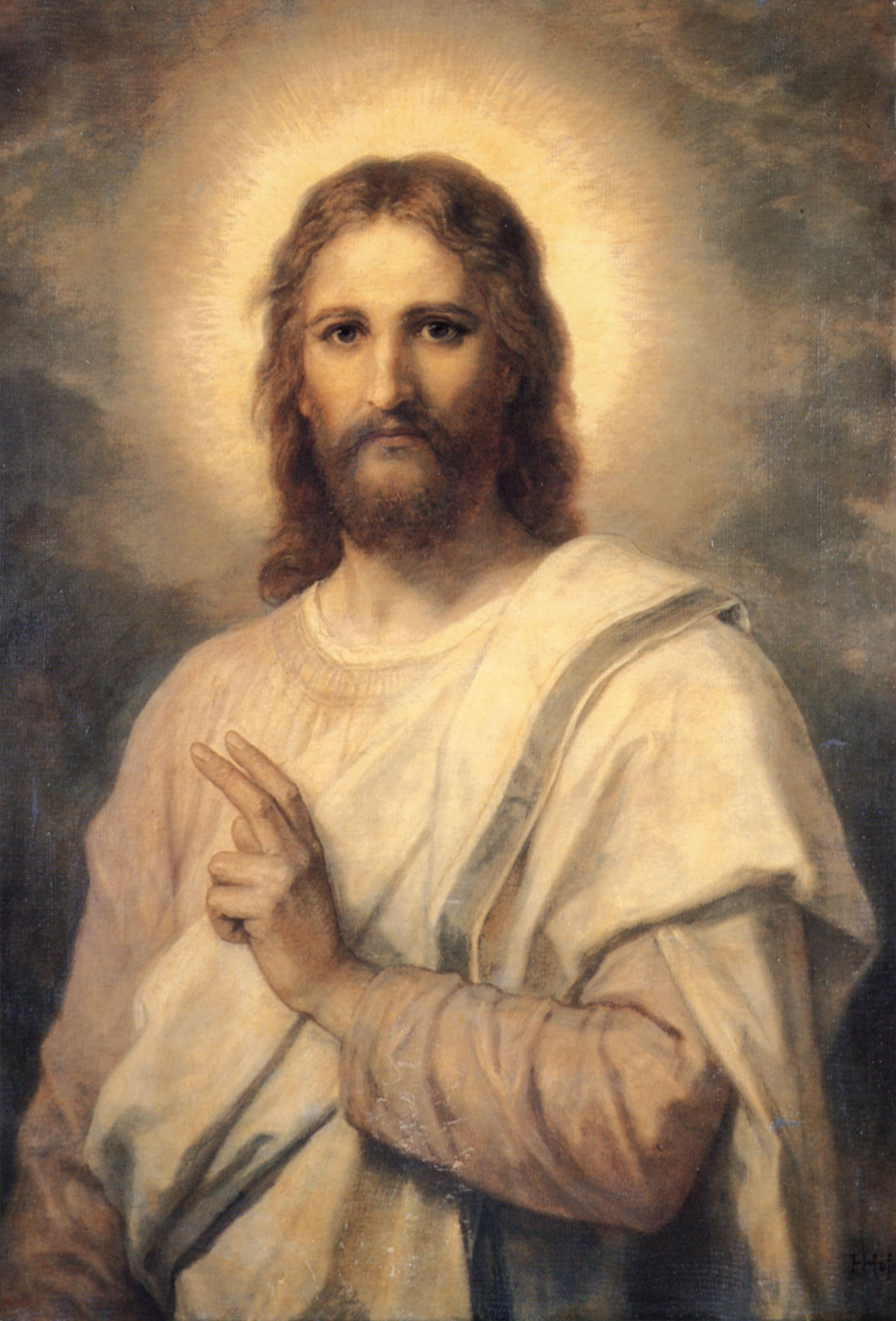
When I imagine Jesus – similar to when I imagine the Buddha – what initially comes to mind is someone who was pretty emotionally flat or emotionally neutral. If there’s an emotion I associate with Jesus, it’s one of serenity. Maybe this is because, when I consider Jesus, my mind’s eye turns to paintings and statues I’ve seen throughout my lifetime, such as the one my mom hung in our living room when I was a boy. In these, Jesus seemed to be beyond human emotion.

Heinrich Hofmann’s 1894 Painting | Wikimedia Commons

I’ve long been fascinated by emotion. Part of what inspired my calling to Psychology as an undergraduate were experiences at the University of Wisconsin helping to do research in influential emotion labs exploring embarrassment (with Dacher Keltner) and interest (with Judy Harackiewicz). In graduate school, at the University of Minnesota, I conducted research investigating correlates of emotional well-being, including anxiety, depression, hostility, and happiness (with Pat Frazier). I’m generally curious about how individuals feel, and I watch for non-verbal indications of how people react to life. It seems to me that someone’s emotional life reveals something deeply important about who they are.

I’ve also long been a follower of Jesus. Surely, a lot of this has to do with being raised in a Christian family in an often times Christian-dominant culture. But, there’s also something about the stories of Jesus that intrigue me. There’s something about who Jesus was that seems different, countercultural, and stunning.

It wasn’t until recently that I started to seriously explore the intersection of these two parts of myself. That is, I’ve started to wonder about the actual – not the imagined – emotional life of Jesus. In contrast to the sense I’ve received in some parts of Christianity to which I’ve been exposed, as I read it now, Jesus was a person of deep, passionate emotional intensity.

To explore Jesus’s emotional life, I did a focused study of the Gospel of Mark. This Gospel generally is considered by Bible scholars to be the earliest Gospel – written about 40 years after Jesus’s death. As the progressive Bible scholar, Marcus Borg argued, this account of Jesus’s life likely includes elements of both metaphor and remembered history, but the emotions attributed to Jesus, as discussed below, seem most likely to be traceable to the historical Jesus. As one reads this Gospel, there’s also an evident sense of immediacy to it, which lends itself to an investigation of Jesus’s emotional life.

To better understand context, as I read through Mark, I noted passages that described where Jesus chose to spend his time. He seemed to spend a lot of his days by the water (1:16; 2:13; 3:7; 4:1; 5:1), in the mountains (3:13; 6:46), in Synagogue (1:21; 3:1; 6:2) and, maybe not surprising for someone who didn’t seem to have a home of his own, in other people’s homes (1:29; 2:15; 3:20; 14:3). He seemed to frequently withdraw into nature to get away from the demands of the crowds, and to pray (e.g., 1:35; 6:46). This begins to give an indirect glimpse into Jesus’s emotional life.

In looking for more direct descriptions, what most surprised me in studying the Gospel of Mark was how often Jesus seemed to experience great irritation, sometimes to the point of almost seeming impatient. Jesus was said to speak “sternly” (1:25). On several occasions, he was described as being “indignant” (1:41; 10:14). At one point, Jesus looked at his skeptics “in anger… deeply distressed at their stubborn hearts” (3:5). When he finds people selling in the temple courts, he drives them out, overturning tables in anger (11:15-17).

Continue reading

Why Religious Fundamentalism Can Inspire Hatred (and what to do about it)

Intermixed with much of the worst of human history is a religious motivation. This can be seen in the involvement of a religious motivation in the genocide committed against American Indians and the Holocaust. More recently, this can be seen in the motivation behind tragedies such as the 9/11 terrorist attacks and the January 6 attack on the United States Capital. Other examples include the involvement of religion in motivating prejudice and violence directed toward members of the LGBTQ population and various cases of religious persecution.  

Hooded Members of the Ku Klux Klan Displaying Christian Imagery, 1935.

As Blaise Pascal once reflected: “human beings never do evil so completely and so joyously as when they do it from a religious motivation.”

How can great world religions – which generally teach love, compassion, and justice – become powerful instruments of prejudice and violence?

Although acts of religiously-inspired hatred are complex and caused by many variables, one common factor concerns religious fundamentalism.

Religious fundamentalism involves a rigid kind of certainty in the possession of the “one truth” and the “one way” to live. It typically relies on a literal interpretation of a sacred text and an absolute reliance on that text. Other sources of knowing what’s true or other ways of determining what’s valuable are rejected – such as when science or a different group offers an alternative perspective – in favor of what’s unquestioningly accepted within the group.

With this all comes a strong urge for fundamentalists to form a sense of who are “insiders” and who are “outsiders.” Explicitly or implicitly, it’s easy for all of us to believe members of our groups are superior, while others are inferior. One way for religious fundamentalists to address this is to develop an evangelical zeal to bring outsiders to the inside through attempts to convert them. However, when individuals reject their arguments or invitations, fundamentalists can develop even stronger attitudes against them, to the point where outsiders can become seen as less than their human equals, sometimes even leading to consciously or unconsciously dehumanizing them. At this point, prejudice and violence toward members of the outgroup become more likely.

Because fundamentalist groups also tend to draw like-minded people to their communities, individuals in these groups often decrease or completely lose contact with those different from themselves. As a result, the kinds of reality checks most people tend to naturally have happen to them when they interact with people different from them become less likely, creating the conditions for stronger stereotypes and prejudices to develop.    

Continue reading

The Ways of the Fundamentalist and the Mystic

For many people, being religious means being a religious fundamentalist. From the media, this is the impression often given. However, decades of thinking and research in the psychology of religion suggest there are multiple ways of being religious, with distinct pros and cons.

Let me elaborate with a few personal stories.

About 20 years ago, I happened to be visiting a conservative Christian college when I was somehow invited to a retirement party for a faculty member – I believe a Theology Professor – who had worked at this college for many years. At one point, this man took center stage and spoke about his long and distinguished career. The Professor’s speech started as you might expect – with references to the meaningfulness of his work, gratitude for colleagues, etc. – until he took a surprising turn and honestly reflected on some of his struggles. The Professor started crying. He had a difficult time finding his words. Eventually, though, he explained how he called himself an “Agnostic Christian,” someone who wasn’t certain about religious and spiritual truths but still felt like he knew enough to make a commitment to Jesus and his interpretation of a Christian lifestyle. He discussed how the juxtaposition of “Agnostic” and “Christian” was sometimes not welcomed by conservatives at this college, but how this self-understanding felt so important to him and to his identity that he was moved to tears in sharing it.

For me, the Professor’s presentation felt like a revelation, for a few reasons. First, and most importantly, this was the first time I had ever heard someone openly acknowledge how they were both deeply uncertain about religious and spiritual truths while still being deeply committed to a faith. There was a raw honesty in this confession, and the juxtaposition created a new way for me to start thinking about my own religious and spiritual identification as well. Second, the Professor demonstrated to me the importance of adjectives in the religious world. Apparently, some people don’t simply identify along the lines of “Christian;” some identify as “Conservative Christian,” “Agnostic Christian,” “Social Justice Christian,” or “Mystical Christian.” In these cases, which of the two words is the adjective and which is the noun also can be enlightening to consider.

Fast forward a few weeks, when I found myself in a large group discussion about religion and spirituality at my public college. People were sharing their diverse ideas about religion and spirituality, and I thought I would “float” the above story and how it fit with my own self-understanding. A few people I didn’t know had joined us from a conservative Christian student club on campus, and after I shared, they walked over to me. I will never forget what happened next. One of them bent down and whispered into my ear: “you can’t be Christian and not know.”

Many people do not seem to recognize there are different ways you can be religious.

Volodymyr Hryshchenko | Unsplash

Source: Volodymyr Hryshchenko | Unsplash

Continue reading

The Top 5 Posts for 2021

It’s been another year for the books. Somehow, in the midst of everything, more and more people seem to be following this blog.

As a way to review the year, below are my most-read articles that I wrote during 2021. If you haven’t had a chance to read these articles yet, you may be interested in checking them out.

5. Awe Decreases Political Polarization

In a time of great political polarization, this post explores new research on how experiences of awe may help bring people together.

4. Awe as a Resource for Coping with Stress

Based on new research, this post examines how awe experiences diminish the stress response.

3. Settling into Winter

Honestly, this is one of my favorite things I’ve ever written. It explores how I try to experience the coziness of Winter.

2. The Science of Motivating Others

This blog post briefly went viral on Psychology Today. It relates to an old and new interest I have in the science of motivation.

1. Six Skills We Need as Citizens Who Can’t Agree on Scientific Facts

This was an opinion piece I published with the Star Tribune this Summer. It was born out of my frustration with people who can’t seem to accept facts.

Share this:

Tanya Luhrmann Zoom Talk on Spiritual Experience

I’m very excited to help host a Zoom talk by Dr. Tanya Luhrmann, Professor of Anthropology and Psychology at Stanford University, on Tuesday, October 5, from 1:00-2:15 p.m. CDT. Dr. Luhrmann is a one-of-a-kind researcher, the only scientist in the world really exploring connections among spiritual experience, psychotic experience, personality, and culture. This event is free and open to the public! Sign up at Eventbrite below to receive the Zoom link and more information.

https://www.eventbrite.com/…/voices-of-spirit-voices-of…

Awe Decreases Political Polarization

As my wife and I walked from the front doors to the worship center of the exponentially growing church we used to attend in the mid-1990s, we often remarked how much relational tension filled the hallways. Young couples frequently walked together in silence, their faces sometimes providing brief glimpses of the irritation they felt toward each other. Moms and dads regularly yelled at kids to get them to Sunday school. Friends and acquaintances mostly kept to themselves.    

People had good reason for waking up early on a Sunday morning to pack the auditorium. The young preacher challenged us with mind-stretching insights that directly applied to our lives. The band led us into worship experiences that connected us with God in ways that melted our selves into something larger.

During these times of shared praise, in particular, emotion poured out of many. I often cried during songs, for example, tears pouring down my face. Sometimes, I’d be unable to continue singing, in fact, feeling so “choked up.” There were even a few times when I felt so overwhelmed I had to physically brace myself with the chair in front of me because I was literally “weak in the knees.”

When we left the worship space, my wife and I frequently commented how those around us seemed palpably different than when they arrived. Not everything was perfect, of course, but tension had lifted. Young couples looked more in love, holding hands on their way out the door. Families played. Others welcomed conversation over coffee and donuts.

If this had been a one-time occurrence, I may not have thought much of it. But, it was so predictable, it was almost comical. Pretty much every week, the same basic story unfolded: people were being transformed.

Maybe the most notable observation we made, though, at least in retrospect, occurred when we left the church building and walked back to our car. The parking lot typically was much fuller than when we arrived, and we often were struck by the range of political bumper stickers. Frequently, we’d see people part ways in the parking lot with a handshake or hug, only to enter cars with stickers suggesting different political affiliations.

As a young Ph.D. student studying Psychology at the University of Minnesota at the time, I wondered: what might help account for the powerful positive effects we were observing? Nothing in psychological science seemed capable of providing a good explanation.

Continue reading