Initially motivated by my concerns about how many courses seem increasingly guided by textbooks and publisher resources, this article published today at Inside Higher Ed seeks to bring together many of my thoughts about teaching and learning in higher education.
Like it has done for so many, college transformed me.
It started on freshman move-in day. My dad, my brother, and I drove 4 ½ hours from my small town of 300 people in rural Minnesota to the eye-popping, “big city” of Madison, Wisconsin. I enrolled in the University of Wisconsin because I had watched the University compete on television in Big 10 sports. Beyond that, I knew very little of what I was getting myself into. So, on move-in-day, I was astonished by the city: the grandeur of the state capital, the beauty of the lakes surrounding campus, and the expansive cultural life scattered throughout.
It took a while for me to orient myself, but I eventually settled into my new home, where I gradually encountered a variety of mind-stretching experiences. When the first semester started, I couldn’t believe I was being taught by renowned experts who raised deep issues and facilitated far-reaching discussions about ideas way beyond anything I previously realized even existed. I went with my friends to ethnic restaurants, with flavors I never tasted before. I visited an art museum for the first time. I attended massive political rallies, being exposed to people with passions and perspectives unlike any I had ever encountered.
I enrolled in what was to become my favorite college course – Environmental Science – during my second year. Most evocative for me was the weekly required lab, usually consisting of a field trip. One trip especially stands out. We met at our Professor’s home, located on the edge of a wetland outside Madison. It was a cold, January afternoon, and there was at least 6 inches of snow on the ground. The Professor eventually led us to a bubbling brook in which I was stunned to find vibrant, green watercress growing. He picked some for us to taste. Not only did I not realize any vegetable grew in this kind of winter climate, I was dumbfounded by the peppery, fresh flavor and icy, crisp texture of the watercress itself. This course, more than any other experience I’ve ever had, nurtured in me a love of nature and a commitment to conservation.
After four years of these kinds of encounters, my mind had expanded in ways that made me almost unrecognizable from the person I had been previously. In retrospect – and knowing what I know now – I believe this is because college regularly exposed me to feelings of awe.
According to Dacher Kelter, in his book, “Awe: The New Science of Everyday Wonder and How It Can Transform Your Life,” awe “is the feeling of being in the presence of something vast that transcends your understanding of the world.” To clarify, many kinds of vastness can trigger this emotion. For instance, we might feel awe in the presence of something huge, powerful, timeless, or complex. Other people can leave us awestruck as well because of their astounding knowledge, virtue, or skill.
Twenty years of research on the emotion of awe reveals many unique positive effects. For example, awe takes the focus off of ourselves, humbling us in the presence of something beyond us. Physiologically, awe can bring tears to our eyes, chills to our bodies, and goosebumps to our skin. More broadly, awe promotes well-being and interpersonal connection. It may even decrease the body’s inflammation response.
Less research has explored how awe impacts learning and development, but a deeper inspection yields some clues. According to the great psychologist, Jean Piaget, our minds grow through two interrelated processes: assimilation and accommodation. When we assimilate, we fit new experiences into our existing mental frameworks, something not possible during awe. This is because the vastness of what we’re encountering in an awe experience cannot be comprehended with our current way of thinking. As a result, we’re absorbed into a process of trying to reduce the discrepancy between our new knowledge and our pre-existing knowledge. As we do so, we may feel confused, disoriented, or even frightened, as we feel a need to accommodate and create an expanded or entirely different mental framework. We may start to wonder and become curious about new questions. If we can successfully expand our minds in ways that incorporate the new information, we may significantly change how we think, what we believe, and potentially even how we self-identify. Even if we can’t ever fully accommodate an experience, our lives may be taken into different directions as we explore a new passion.
In his book, Keltner describes 8 common sources of “everyday wonder,” any of which could spark transformative change. These sources include exposure to lives and acts of moral beauty; the collective effervescence of big events, rallies, and ceremonies; various features of the natural world; music; visual design; great mysteries that often underlie religion and spirituality; the beginning and end of life; and ideas and truths that stretch our minds beyond what we previously believed was possible. College can regularly expose students to these kinds of stimuli.
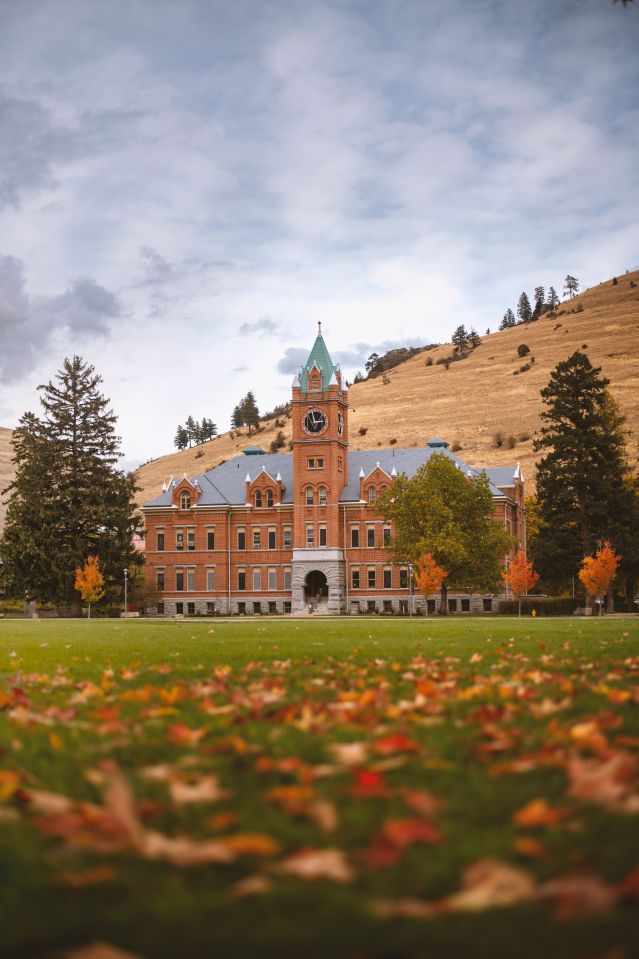
Steven Cordes | Unsplash
Based on all this, my best advice to students is to seek awe during your time in college, inside and outside the classroom. Get involved in opportunities that stretch you, such as service learning, internships, field trips, community events, and study abroad and away programs. You may occasionally feel confused, disoriented, and even frightened because of what you’re experiencing. That’s okay: a real education requires some degree of discomfort. Pay attention to what brings you awe and follow that path, seeing what interests and passions that leads you toward. Give yourself space to wonder, to figure things out. Then, when you walk across the stage at your graduation ceremony, you, too, may find you have transformed into a version of yourself you wouldn’t have thought possible when you began.
“What enables a student to be a successful learner in school, while others struggle?,” I recently asked. As I said in a previous post, part of the answer may have to do with trusting that a student can learn independently, just as kids typically learn independently before formal schooling begins. Teachers and parents can encourage students to reconnect with their “lost instincts” to learn on their own, particularly at this time when students must learn at home without as much direct supervision.
The student experience is complex, however, and often neglected. As education theorist, John Dewey, wrote in the early 20th century: “the center of gravity is outside the child. It is the teacher, the textbook, anywhere and everywhere you please except in the immediate instincts and activities of the child.”
As I have tried to understand what enables some students to thrive in school during my past 20 years of college teaching, I have returned again and again to three interrelated domains that may be most fruitful to explore: (1) mindset, (2) self-discipline, and (3) motivation. Psychological research has found these domains to be most critical in student success.
Mindset
One of the primary psychological determinants of a student’s performance concerns how they explain success and failure to themselves. In over 30 years of research, Carol Dweck, Professor of Psychology at Stanford University, consistently has found that individuals with a “fixed mindset” – who believe that success and failure reflects a certain level of ability unlikely to change no matter what is done – often show lower levels of performance over time. Dweck finds this may be due, in part, to the fact that people with fixed mindsets are less likely to seek challenge at the outset and less likely to persevere when challenges arise. In contrast, individuals with a “growth mindset” – who believe that ability can be developed through hard work or effort or trying out different strategies until one works – often show higher levels of performance over time. People with a growth mindset are more likely to seek challenge and believe they can overcome challenges with perseverance when they arise.
When I look backward into my youth – forward all the way to today – I observe an undeniable, constant strand: Part of my identity is that of being a learner and a teacher.
Of course, there are many ways to be a learner and a teacher (two sides of the same coin for me, anyway). Right now, in my life, for example, I a professional teacher, a college professor. However, I also learn and teach at church (as I did recently in leading a group on gays and the church), as a parent, and even sometimes as a friend. This blog post, in fact, is also an act of learning and teaching for me, as it involved reading, thinking, and now sharing. Others learn and teach in their roles as managers, coaches, crew leaders, volunteer leaders, mentors, and pastors. Learning and teaching are roles many of us play in everyday life.
Despite their surge in popularity, many harbor deep reservations about the quality of online courses. There are several possible reasons for this, but perhaps most fundamentally are serious concerns about the experience of online students. In particular, many ask: can online courses provide the kind of experience crucial for students to develop critical thinking, curiosity, and creativity, consistent with the highest ideals of liberal arts education?
I have taught online for several years, and I have struggled with this question as well. However, new thinking and research convinces me that all courses – including those online – have the potential to elicit powerful emotions that can inspire long-term knowledge creation.
 Andy Tix