As a psychologist of religion and spirituality, I’ve often been asked what I mean when I use the word “spirituality.” I’ve been studying this topic for 30 years, and though I’ve found some definitions helpful, I’ve always suspected these definitions somehow come up short. For example, renowned psychologist of religion and spirituality, Ken Pargament, defines spirituality as “the search for the Sacred.” I like this definition, and in some ways, I rely on it, including in this article. But what exactly is “Sacred?” And how exactly do people go about “searching” for it?
I recently finished reading the book “Done: How to Flourish After Leaving Religion,” by another psychologist of religion and spirituality, Daryl Van Tongeren. The final chapter, “Post-Religious Spirituality,” offers a fresh way of thinking about these questions that brought me clarity, as it lays out seven different ways of being spiritual. Not seven different religions or dogmas. Seven varieties of spiritual experience. When I read this chapter, something clicked into place and, after all these years, I felt like I understood spirituality differently.
As you read below, you might ask yourself: how many of these seven ways of being spiritual resonate with you?
Five Ways We Encounter the Sacred
Van Tongeren begins by drawing on a 2015 study in which he and his colleagues advance a deceptively simple insight. People differ in perceptions of what’s Sacred. These differences lead to five primary sources of spirituality:
Theistic spirituality. For some, the Sacred is found in God, or some kind of Higher Power. This form of spirituality is common, particularly because it’s supported by longstanding religious traditions, rituals, and communities. Van Tongeren notes that faith, at its core, reflects trust in something higher and hope for something beyond present reality – characteristics of theistic spirituality as well. If you would describe yourself as feeling near to God, this may be a defining part of your spiritual life.
Nature spirituality. For others, the Sacred is rooted in a deep connection with the natural world. In essence, nature spirituality involves awe and reverence for the earth and its beauty. This can be witnessed in someone who finds great meaning while walking in the woods, gazing at the stars, or observing an animal. Some may feel this while caring for a plot of land close to home or working for environmental preservation or justice more broadly. If you feel close to nature, this may be an important form of spirituality in your life.
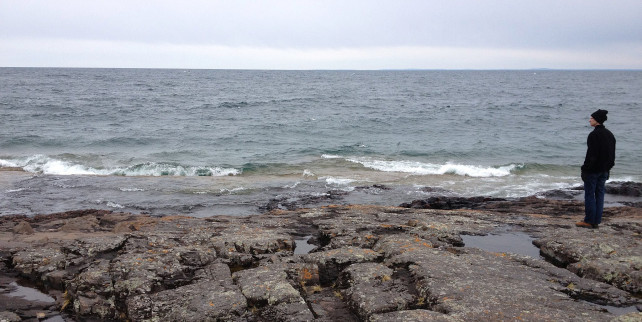
Many people experience a spiritual connection in nature. I know I do. When I hike through the woods, sit by a stream, gaze at the sky, or even listen to a bird sing, I feel part of something larger. Nature feels like a cathedral to me, offering sacred space to reflect on my relationship with the Divine.
Psychologists have a name for this impulse to perceive the sacred in nature: “ecospirituality.” In a recent article published by the Association for Psychological Science, scientists reviewed research on how ecospirituality relates to two of the great challenges facing our world today: (1) preserving the well-being of our planet and (2) preserving the well-being of ourselves.
What is “Ecospirituality?”
Many of us love spending time in nature. We may even identify as “environmentalists.” Ecospirituality, however, goes further: it involves viewing nature as inherently “spiritual” or “sacred,” something that inspires reverence or a sense of timelessness. Consider these statements, which come from the main scientifically validated measure of ecospirituality:
“There is sacredness in nature.” “When I am in nature, I feel a sense of awe.” “Sometimes I am overcome with the beauty of nature.”
Do you resonate with these statements? If so, you likely score high in ecospirituality.
Our planet faces more environmental challenges than I can list here. Psychologists believe that perceiving a spiritual connection in nature motivates people to take care of our earth beyond the influence of other pro-environmental attitudes and identities.
For instance, in one study, participants high in ecospirituality perceived elements of the natural world (like oceans, mountains, and forests) to be closer to their inner circle of moral concern than participants low in ecospirituality. For those high in ecospirituality, in other words, the earth feels more like a good neighbor we’re compelled to help than a foreign citizen we feel we should.
Ecospirituality also encourages feelings of gratitude. When we perceive something spiritual in nature, we tend to appreciate it more.
Overall, available research suggests that, if we believe nature is sacred, we hold it closer to our hearts, and we’re more grateful for it. This makes us more likely to want to protect it.
Ecospirituality and Well-Being
Ecospirituality not only benefits our planet, however; it also benefits our emotional health. Psychologists believe that those who engage with nature on a deeper, spiritual level experience a range of such personal benefits.
Do you want to bring more of your whole self to work? Psychological research suggests your work would benefit from incorporating aspects of personal spirituality.
As many of us know, however, work often doesn’t function “at its best.”
According to the World Health Organization, work burnout is characterized by being depleted or exhausted at work; feeling distant from one’s job, including feeling cynical about it; and reduced professional effectiveness. This appears to be increasingly common. For example, in a recent national survey of American workers, more than half (57%) report they are currently experiencing at least a moderate amount of work burnout.
Often times, work stress and burnout stem from factors beyond our control. But, is there anything we can do that would help us cope with work-related difficulties? Is there anything we can do to thrive?
Something many of us haven’t really considered is how the spiritual part of our lives might relate to our work lives. Approximately 86% of American adults report being at least somewhat spiritual, and for those who have integrated spirituality into their work, studies suggests significant benefits. In a recent review of research, for example, workplace spirituality was said to have “significant potential to influence workers and organizations in meaningful ways, fostering integrated (rather than segmented) lives and giving rise to personal and organizational well-being.”
Below are four suggestions for how we might meaningfully incorporate spirituality into work.
1. Seek awe to cope with work-related stress and burnout.
So, before work, during a break, after our work day ends, or on time off, we can intentionally seek awe to cope. For instance, we can go into nature and purposely focus on whatever most strikes us as beautiful that gets us out of our current frame of reference. We can dedicate time to connect with a sacred text, using our imaginations to deepen the transcendence of the experience. We can go to a spiritual gathering or location sacred to us and mindfully focus on something vast that elevates us.
Awe practices such as these may shift our attention away from our selves and our troubles and help us to respond at work in more centered and effective ways.
Like it has done for so many, college transformed me.
It started on freshman move-in day. My dad, my brother, and I drove 4 ½ hours from my small town of 300 people in rural Minnesota to the eye-popping, “big city” of Madison, Wisconsin. I enrolled in the University of Wisconsin because I had watched the University compete on television in Big 10 sports. Beyond that, I knew very little of what I was getting myself into. So, on move-in-day, I was astonished by the city: the grandeur of the state capital, the beauty of the lakes surrounding campus, and the expansive cultural life scattered throughout.
It took a while for me to orient myself, but I eventually settled into my new home, where I gradually encountered a variety of mind-stretching experiences. When the first semester started, I couldn’t believe I was being taught by renowned experts who raised deep issues and facilitated far-reaching discussions about ideas way beyond anything I previously realized even existed. I went with my friends to ethnic restaurants, with flavors I never tasted before. I visited an art museum for the first time. I attended massive political rallies, being exposed to people with passions and perspectives unlike any I had ever encountered.
I enrolled in what was to become my favorite college course – Environmental Science – during my second year. Most evocative for me was the weekly required lab, usually consisting of a field trip. One trip especially stands out. We met at our Professor’s home, located on the edge of a wetland outside Madison. It was a cold, January afternoon, and there was at least 6 inches of snow on the ground. The Professor eventually led us to a bubbling brook in which I was stunned to find vibrant, green watercress growing. He picked some for us to taste. Not only did I not realize any vegetable grew in this kind of winter climate, I was dumbfounded by the peppery, fresh flavor and icy, crisp texture of the watercress itself. This course, more than any other experience I’ve ever had, nurtured in me a love of nature and a commitment to conservation.
After four years of these kinds of encounters, my mind had expanded in ways that made me almost unrecognizable from the person I had been previously. In retrospect – and knowing what I know now – I believe this is because college regularly exposed me to feelings of awe.
According to Dacher Kelter, in his book, “Awe: The New Science of Everyday Wonder and How It Can Transform Your Life,” awe “is the feeling of being in the presence of something vast that transcends your understanding of the world.” To clarify, many kinds of vastness can trigger this emotion. For instance, we might feel awe in the presence of something huge, powerful, timeless, or complex. Other people can leave us awestruck as well because of their astounding knowledge, virtue, or skill.
Twenty years of research on the emotion of awe reveals many unique positive effects. For example, awe takes the focus off of ourselves, humbling us in the presence of something beyond us. Physiologically, awe can bring tears to our eyes, chills to our bodies, and goosebumps to our skin. More broadly, awe promotes well-being and interpersonal connection. It may even decrease the body’s inflammation response.
Less research has explored how awe impacts learning and development, but a deeper inspection yields some clues. According to the great psychologist, Jean Piaget, our minds grow through two interrelated processes: assimilation and accommodation. When we assimilate, we fit new experiences into our existing mental frameworks, something not possible during awe. This is because the vastness of what we’re encountering in an awe experience cannot be comprehended with our current way of thinking. As a result, we’re absorbed into a process of trying to reduce the discrepancy between our new knowledge and our pre-existing knowledge. As we do so, we may feel confused, disoriented, or even frightened, as we feel a need to accommodate and create an expanded or entirely different mental framework. We may start to wonder and become curious about new questions. If we can successfully expand our minds in ways that incorporate the new information, we may significantly change how we think, what we believe, and potentially even how we self-identify. Even if we can’t ever fully accommodate an experience, our lives may be taken into different directions as we explore a new passion.
In his book, Keltner describes 8 common sources of “everyday wonder,” any of which could spark transformative change. These sources include exposure to lives and acts of moral beauty; the collective effervescence of big events, rallies, and ceremonies; various features of the natural world; music; visual design; great mysteries that often underlie religion and spirituality; the beginning and end of life; and ideas and truths that stretch our minds beyond what we previously believed was possible. College can regularly expose students to these kinds of stimuli.
Steven Cordes | Unsplash
Based on all this, my best advice to students is to seek awe during your time in college, inside and outside the classroom. Get involved in opportunities that stretch you, such as service learning, internships, field trips, community events, and study abroad and away programs. You may occasionally feel confused, disoriented, and even frightened because of what you’re experiencing. That’s okay: a real education requires some degree of discomfort. Pay attention to what brings you awe and follow that path, seeing what interests and passions that leads you toward. Give yourself space to wonder, to figure things out. Then, when you walk across the stage at your graduation ceremony, you, too, may find you have transformed into a version of yourself you wouldn’t have thought possible when you began.
I’ve taught a course in the Psychology of Religion and Spirituality for about 20 years. As part of this course, I often invite speakers to share their religious and spiritual life stories and insights with the class. One of the most provocative perspectives ever shared came from a Jewish speaker. To paraphrase, he would say:
I know many of you consider yourselves more spiritual than religious, and I know there are many benefits to personal spirituality. However, I have a different take on this. I believe religion is better than spirituality. And I believe this is increasingly so.
The Meaning of “Religion” and “Spirituality”
Although these concepts prove extraordinarily difficult – if not impossible – to adequately define, let me clarify terms as much as possible. In general, religiousness entails behavior concerning the Sacred consistent with what an institution prescribes. Spirituality, in contrast, involves an autonomous question for what is true and meaningful regarding the Sacred, whether inside or outside an institutional context.
Thus, religiousness and spirituality are different but overlapping constructs. Religiousness involves action that harmonizes with a group’s teachings and customs to a greater extent. Spirituality focuses more on an individual’s personal and experiential quest. Common to both religiousness and spirituality is the Sacred: something that lasts forever or that evokes awe or reverence.
The Trend Toward Spirituality
Various surveys in the United States regularly ask respondents to select which of four options best describes them: (1) both religious and spiritual, (2) spiritual but not religious, (3) religious but not spiritual, and (4) neither religious nor spiritual. Results consistently show how respondents are most likely think of themselves as “both religious and spiritual.” However, individuals in these studies increasingly identify as “spiritual but not religious.” For instance, in nationally representative surveys of American adults from the Fetzer Institute, those indicating they were more spiritual than religious rose from 18.5% in 1998 to 33.6% in 2020.
Kevin Bluer | Unsplash
Five Unique Benefits of Religion
Some might consider the notion that religion has unique psychosocial benefits – compared with personal spirituality – offensive or, maybe ironically, “sacrilegious.” However, particularly at this moment in time, in our culture, consider the following:
As a parent, an educator, and an uncle, I worry about this generation of young people.
And there’s good reason to worry.
For example, according to the recently released Youth Behavior Risk Survey, 42% of American high school students felt so sad or hopeless during a 2-week period in 2021 that they stopped doing their usual activities (in 2011, this percentage was 28%). Sadness and hopelessness were especially high in females (57%) and LGBTQ youth (69%). As demonstrated by social psychologist Jean Twenge and others, loneliness also has been on the rise among young people. So have self-focus, individualism, and narcissism.
Do you relate to any of this? Do you personally know a young person who seems to be struggling with their mental health? Do you notice how many youths seem too narrowly self-focused?
What can we, as adults, do to help?
The short answer: we can help young people find more awe.
New Research on Awe in Kids
I’ve been thinking a lot lately about a research article, published recently in the journal Psychological Science. In two studies, researchers randomly assigned some 8-13 year olds to watch an animated movie clip eliciting awe, some to a clip eliciting joy, and some to a clip eliciting a neutral (control) response. Results showed that, compared to the joy and control conditions, the kids led to feel awe more likely participated in an effortful task and more likely demonstrated generosity toward refugees (a group not their own). Those led to feel awe also experienced more of a parasympathetic, calming bodily reaction associated with social engagement.
Awe is an emotional response to something vast that transcends our current frame of reference. The scientists who conducted the awe studies speculate about various activities that may nurture awe in young people. For instance, parents, teachers, or other adults might connect kids to stories that are highly unusual or even magical; music with unexpected harmonies or shifts in energy; amazing theatrical, artistic, or athletic performances; big buildings like cathedrals; and beautiful places in the natural world.
Much of this stands in contrast to the common view that great literature, music, theater, art, and time spent in nature don’t have much real-world impact and that they are expendable from school curricula.
Applying This Research to Help Young People
Of course, many factors likely threaten youth mental health. Although I personally would love to see a nationwide prohibition of social media until the age of 18 – or at least a change in school policies such that times could be intentionally carved out during the school day when cell phones are not accessible to students – these changes lie largely beyond my control. As a parent, I could restrict my kids’ technology use – and I wish I had done that when they were younger – but I feel that, ultimately, in this culture, adding family restrictions may cause other problems. Overuse of technology seems to be more of a systemic, cultural problem.
A more effective, more practical strategy may be to help the young people in my life find more awe. I can do my best to encourage a love of reading, theater, music, art, and sports. I can enroll my kids in schools that are environmentally-focused. When I’m teaching, I can bring my classes outside, when possible. I can bring my son to a live concert. I can bring my nephew to the zoo.
For thousands of years, religious and spiritual communities around the world have organized themselves around specific practices they find meaningful. In recent years, psychological scientists have been in conversation with such communities, trying to learn about these practices, sometimes refine them, and test the effects of related interventions on well-being. For those who consider themselves somehow spiritual – about 86% of American adults in one recent nationally representative survey – these activities may hold special significance. Although whether or not a practice really is “spiritual” depends on the person and what they hold sacred, these activities may be central parts of a lifestyle that prioritizes and integrates spirituality and well-being.
Below are five forms of spiritual practice that psychological research suggests increase well-being.
1. Meditation
Meditation practices refer to a broad collection of activities that seek to focus the mind. Really almost anything can be a support for attention during a meditation practice. For example, we can focus on our breathing, a meaningful word of our choice, a raisin, the movement of light on the floor as it comes through a window, the sound of a bird, sensations of emotional or physical pain, a text that holds spiritual significance, the kindness of a loved one, or the presence of the divine, just to name a few.
In recent years, a variety of apps have become available to help people engage in these kinds of activities. My favorite is the free “Healthy Minds Innovations” app from the Center for Healthy Minds at the University of Wisconsin – Madison.
2. Awe
Dacher Keltner defines awe as the feeling we get when we’re in the presence of a vast mystery that transcends our understanding of the world. For instance, we might feel awe in the presence of something huge, powerful, timeless, or intricate. Other people can leave us awestruck as well because of their astounding virtue, knowledge, or skill.
Priscilla Du Preez | Unsplash
Taking an intentional awe walk is one way we can seek awe. This might involve taking at least 15 minutes to stroll through a natural area, maybe one that brings us through a wooded area or field of flowers, or near a lake or river. Alternatively, we can take a walk under the night sky, at dawn or dusk, or while a thunderstorm is taking shape in the distance. As we take our walk, part of the practice entails taking our time to really try to take in what we notice as vast, for example by allowing ourselves to by swept away by a view or amazed by the detail of a flower.
3. Forgiveness
Forgiveness refers to a process of letting go of negative emotions and the urges to seek revenge or avoid another because of the pain they caused us. Importantly, forgiveness need not involve telling a person we forgive them, condoning or forgetting a hurtful action, or restoring a relationship.
My mom died from cancer when I was 14. Although her death wasn’t unexpected, it stunned me nonetheless.
One particular moment in the days following my mom’s death stands out. The night before the funeral, there was a wake in which her dead body was laid in an open casket so mourners could say their final goodbyes. For various reasons, I did not want to see my mom’s body, and I awkwardly tried to avoid it. Our priest – a good friend of mine, as well as my mom’s – must have noticed. He slowly walked up to me and, tenderly, asked if I’d like to go with him to see my mom one last time. He took my hand into his and we made our way. I believed I was supposed to feel sad and maybe even angry, and I felt those emotions as well. But, more than anything, as I gazed at my mom’s dead body, what I most felt was awe.
Dacher Keltner’s recently released book “Awe: The New Science of Everyday Wonder and How It Can Transform Your Life” most surprised me with its’ discussion of how often death evokes awe. In a study of 2,600 narratives coming from 26 countries, as described in the book, stories of death and awe were common. In a surprising demonstration of this, Keltner – the pioneering Berkeley psychologist most responsible for leading the way for a new science of awe – tells a story in the book similar to my own. As his beloved brother, Rolf, lay dying of cancer in front of him and his family, Keltner recounts:
“I felt small. Quiet. Humble. Pure. The boundaries that separated me from the outside world faded. I felt surrounded by something vast and warm. My mind was open, curious, aware, wondering.”
Keltner defines “awe” as “the feeling of being in the presence of something vast that transcends your understanding of the world.” Given this definition, it’s easy to see why death so often evokes awe. When I stood in front of my mom’s dead body, for instance, I felt dumbfounded by questions such as “where did my mom go?,” “what does life mean?,” and “what is eternity?” These vast mysteries went well beyond anything my 14-year-old mind (or any mind) can comprehend, but my wondering led me to develop curiosities and eventually gain insights that have impacted the rest of my life. Of course, I wish my mom had lived much longer. At the same time, I wouldn’t be the person I am today – in a positive sense – if I hadn’t had to face her death like I did.
This connection between death and awe is, at least in part, why so many people become so fascinated by the morbid. For example, dark tourism may enable individuals to feel awed and to probe essential issues of life, death, sacredness, and meaning. I have led courses in the Psychology of the Holocaust, for instance, including trips to Holocaust sites in Europe, and rarely have I seen students so absorbed or impacted by phenomena being studied as when we directly encountered the overwhelming memorials of death we visited.





 Andy Tix