Category Archives: Religion

Quaker Advices and Queries

Within Christianity, some traditions emphasize a more mystical and spiritual approach than others. One tradition I’ve been particularly intrigued by is Quaker spirituality.

Part of Quaker spiritual practice is to identify, share, and meditate on specific advices and queries. Some of these can be traced back to George Fox in the mid-1600s. In some ways, these advices and queries translate Quaker experiences and insights about the Gospels into modern life.

Communities might lead a service with reference to an advice or query, and individuals might meditate on one for an hour, a day, a week, or a year.

I’ve been studying Quaker advices and queries shared by meetings across the world for several years. Below I’ll share some of my favorites, which mostly come from the London, New York, and New England yearly meetings.


Apponegansett Meeting House, Jean Schnell

Advices:

Take heed to the promptings of love and truth in your heart.

Bring the whole of your life under the ordering of the spirit of Christ.

Seek to know an inward stillness, even amid the activities of daily life.

While respecting the experiences and opinions of others, do not be afraid to say what you have found and what you value.

Try to find a spiritual wholeness which encompasses suffering as well as thankfulness and joy.

Each of us has a particular experience of God and each must find the way to be true to it.

Listen patiently and seek the truth which other people’s opinions may contain for you.

Avoid hurtful criticism and provocative language.

Think it possible that you may be mistaken.

Try to make your home a place of loving friendship and enjoyment, where all who live or visit may find the peace and refreshment of God’s presence.

Let your life speak.

Responding to divine guidance, try to discern the right time to undertake or relinquish responsibilities without undue pride or guilt.

Search out whatever in your own way of life may contain the seeds of war.

Do not let the desire to be sociable, or the fear of seeming peculiar, determine your decisions.

Try to live simply.

Stand still, wait for divine guidance, then act.

Be grateful for the gifts you have. Neither be too proud of them nor value them too little. Do not waste time coveting the gifts of others.

Attend to what love requires of you.

Beacon Hill Meeting Room, Jean Schnell

Queries:

Are you open to the healing power of God’s love?

How does Jesus speak to you today? Are you following Jesus’ example of love in action? Are you learning from his life the reality and cost of obedience to God?

Do you respect that of God in everyone though it may be expressed in unfamiliar ways or be difficult to discern?

Continue reading

Five Spiritual Practices that Increase Well-Being

For thousands of years, religious and spiritual communities around the world have organized themselves around specific practices they find meaningful. In recent years, psychological scientists have been in conversation with such communities, trying to learn about these practices, sometimes refine them, and test the effects of related interventions on well-being. For those who consider themselves somehow spiritual – about 86% of American adults in one recent nationally representative survey – these activities may hold special significance. Although whether or not a practice really is “spiritual” depends on the person and what they hold sacred, these activities may be central parts of a lifestyle that prioritizes and integrates spirituality and well-being.

Below are five forms of spiritual practice that psychological research suggests increase well-being.

1. Meditation

Meditation practices refer to a broad collection of activities that seek to focus the mind. Really almost anything can be a support for attention during a meditation practice. For example, we can focus on our breathing, a meaningful word of our choice, a raisin, the movement of light on the floor as it comes through a window, the sound of a bird, sensations of emotional or physical pain, a text that holds spiritual significance, the kindness of a loved one, or the presence of the divine, just to name a few.

In recent years, a variety of apps have become available to help people engage in these kinds of activities. My favorite is the free “Healthy Minds Innovations” app from the Center for Healthy Minds at the University of Wisconsin – Madison.

2. Awe

Dacher Keltner defines awe as the feeling we get when we’re in the presence of a vast mystery that transcends our understanding of the world. For instance, we might feel awe in the presence of something huge, powerful, timeless, or intricate. Other people can leave us awestruck as well because of their astounding virtue, knowledge, or skill.

Priscilla Du Preez | Unsplash

Priscilla Du Preez | Unsplash

Taking an intentional awe walk is one way we can seek awe. This might involve taking at least 15 minutes to stroll through a natural area, maybe one that brings us through a wooded area or field of flowers, or near a lake or river. Alternatively, we can take a walk under the night sky, at dawn or dusk, or while a thunderstorm is taking shape in the distance. As we take our walk, part of the practice entails taking our time to really try to take in what we notice as vast, for example by allowing ourselves to by swept away by a view or amazed by the detail of a flower.

3. Forgiveness

Forgiveness refers to a process of letting go of negative emotions and the urges to seek revenge or avoid another because of the pain they caused us. Importantly, forgiveness need not involve telling a person we forgive them, condoning or forgetting a hurtful action, or restoring a relationship.

Continue reading

The Emotional Life of Jesus

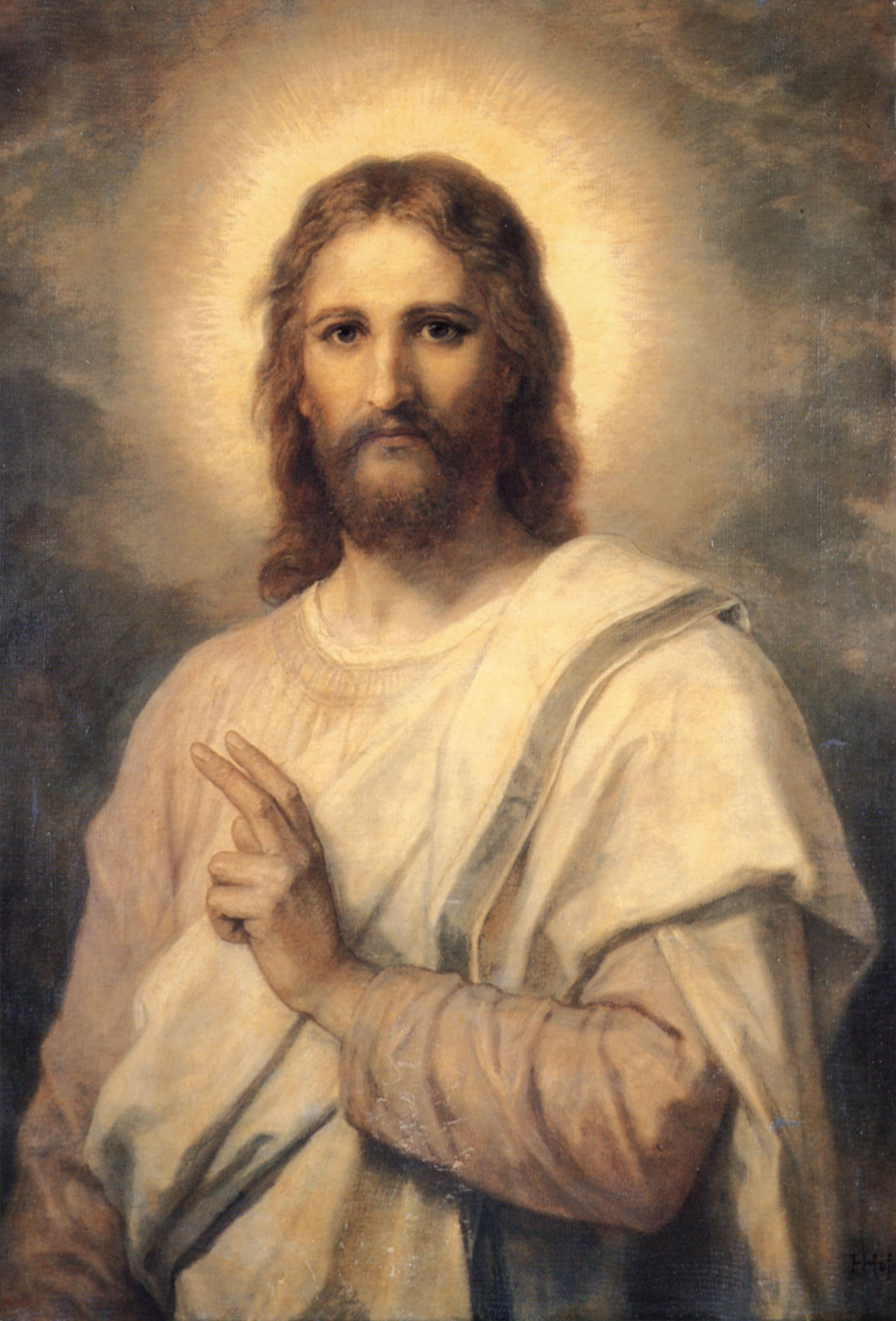
When I imagine Jesus – similar to when I imagine the Buddha – what initially comes to mind is someone who was pretty emotionally flat or emotionally neutral. If there’s an emotion I associate with Jesus, it’s one of serenity. Maybe this is because, when I consider Jesus, my mind’s eye turns to paintings and statues I’ve seen throughout my lifetime, such as the one my mom hung in our living room when I was a boy. In these, Jesus seemed to be beyond human emotion.

Heinrich Hofmann’s 1894 Painting | Wikimedia Commons

I’ve long been fascinated by emotion. Part of what inspired my calling to Psychology as an undergraduate were experiences at the University of Wisconsin helping to do research in influential emotion labs exploring embarrassment (with Dacher Keltner) and interest (with Judy Harackiewicz). In graduate school, at the University of Minnesota, I conducted research investigating correlates of emotional well-being, including anxiety, depression, hostility, and happiness (with Pat Frazier). I’m generally curious about how individuals feel, and I watch for non-verbal indications of how people react to life. It seems to me that someone’s emotional life reveals something deeply important about who they are.

I’ve also long been a follower of Jesus. Surely, a lot of this has to do with being raised in a Christian family in an often times Christian-dominant culture. But, there’s also something about the stories of Jesus that intrigue me. There’s something about who Jesus was that seems different, countercultural, and stunning.

It wasn’t until recently that I started to seriously explore the intersection of these two parts of myself. That is, I’ve started to wonder about the actual – not the imagined – emotional life of Jesus. In contrast to the sense I’ve received in some parts of Christianity to which I’ve been exposed, as I read it now, Jesus was a person of deep, passionate emotional intensity.

To explore Jesus’s emotional life, I did a focused study of the Gospel of Mark. This Gospel generally is considered by Bible scholars to be the earliest Gospel – written about 40 years after Jesus’s death. As the progressive Bible scholar, Marcus Borg argued, this account of Jesus’s life likely includes elements of both metaphor and remembered history, but the emotions attributed to Jesus, as discussed below, seem most likely to be traceable to the historical Jesus. As one reads this Gospel, there’s also an evident sense of immediacy to it, which lends itself to an investigation of Jesus’s emotional life.

To better understand context, as I read through Mark, I noted passages that described where Jesus chose to spend his time. He seemed to spend a lot of his days by the water (1:16; 2:13; 3:7; 4:1; 5:1), in the mountains (3:13; 6:46), in Synagogue (1:21; 3:1; 6:2) and, maybe not surprising for someone who didn’t seem to have a home of his own, in other people’s homes (1:29; 2:15; 3:20; 14:3). He seemed to frequently withdraw into nature to get away from the demands of the crowds, and to pray (e.g., 1:35; 6:46). This begins to give an indirect glimpse into Jesus’s emotional life.

In looking for more direct descriptions, what most surprised me in studying the Gospel of Mark was how often Jesus seemed to experience great irritation, sometimes to the point of almost seeming impatient. Jesus was said to speak “sternly” (1:25). On several occasions, he was described as being “indignant” (1:41; 10:14). At one point, Jesus looked at his skeptics “in anger… deeply distressed at their stubborn hearts” (3:5). When he finds people selling in the temple courts, he drives them out, overturning tables in anger (11:15-17).

Continue reading

Why Religious Fundamentalism Can Inspire Hatred (and what to do about it)

Intermixed with much of the worst of human history is a religious motivation. This can be seen in the involvement of a religious motivation in the genocide committed against American Indians and the Holocaust. More recently, this can be seen in the motivation behind tragedies such as the 9/11 terrorist attacks and the January 6 attack on the United States Capital. Other examples include the involvement of religion in motivating prejudice and violence directed toward members of the LGBTQ population and various cases of religious persecution.  

Hooded Members of the Ku Klux Klan Displaying Christian Imagery, 1935.

As Blaise Pascal once reflected: “human beings never do evil so completely and so joyously as when they do it from a religious motivation.”

How can great world religions – which generally teach love, compassion, and justice – become powerful instruments of prejudice and violence?

Although acts of religiously-inspired hatred are complex and caused by many variables, one common factor concerns religious fundamentalism.

Religious fundamentalism involves a rigid kind of certainty in the possession of the “one truth” and the “one way” to live. It typically relies on a literal interpretation of a sacred text and an absolute reliance on that text. Other sources of knowing what’s true or other ways of determining what’s valuable are rejected – such as when science or a different group offers an alternative perspective – in favor of what’s unquestioningly accepted within the group.

With this all comes a strong urge for fundamentalists to form a sense of who are “insiders” and who are “outsiders.” Explicitly or implicitly, it’s easy for all of us to believe members of our groups are superior, while others are inferior. One way for religious fundamentalists to address this is to develop an evangelical zeal to bring outsiders to the inside through attempts to convert them. However, when individuals reject their arguments or invitations, fundamentalists can develop even stronger attitudes against them, to the point where outsiders can become seen as less than their human equals, sometimes even leading to consciously or unconsciously dehumanizing them. At this point, prejudice and violence toward members of the outgroup become more likely.

Because fundamentalist groups also tend to draw like-minded people to their communities, individuals in these groups often decrease or completely lose contact with those different from themselves. As a result, the kinds of reality checks most people tend to naturally have happen to them when they interact with people different from them become less likely, creating the conditions for stronger stereotypes and prejudices to develop.    

Continue reading

The Ways of the Fundamentalist and the Mystic

For many people, being religious means being a religious fundamentalist. From the media, this is the impression often given. However, decades of thinking and research in the psychology of religion suggest there are multiple ways of being religious, with distinct pros and cons.

Let me elaborate with a few personal stories.

About 20 years ago, I happened to be visiting a conservative Christian college when I was somehow invited to a retirement party for a faculty member – I believe a Theology Professor – who had worked at this college for many years. At one point, this man took center stage and spoke about his long and distinguished career. The Professor’s speech started as you might expect – with references to the meaningfulness of his work, gratitude for colleagues, etc. – until he took a surprising turn and honestly reflected on some of his struggles. The Professor started crying. He had a difficult time finding his words. Eventually, though, he explained how he called himself an “Agnostic Christian,” someone who wasn’t certain about religious and spiritual truths but still felt like he knew enough to make a commitment to Jesus and his interpretation of a Christian lifestyle. He discussed how the juxtaposition of “Agnostic” and “Christian” was sometimes not welcomed by conservatives at this college, but how this self-understanding felt so important to him and to his identity that he was moved to tears in sharing it.

For me, the Professor’s presentation felt like a revelation, for a few reasons. First, and most importantly, this was the first time I had ever heard someone openly acknowledge how they were both deeply uncertain about religious and spiritual truths while still being deeply committed to a faith. There was a raw honesty in this confession, and the juxtaposition created a new way for me to start thinking about my own religious and spiritual identification as well. Second, the Professor demonstrated to me the importance of adjectives in the religious world. Apparently, some people don’t simply identify along the lines of “Christian;” some identify as “Conservative Christian,” “Agnostic Christian,” “Social Justice Christian,” or “Mystical Christian.” In these cases, which of the two words is the adjective and which is the noun also can be enlightening to consider.

Fast forward a few weeks, when I found myself in a large group discussion about religion and spirituality at my public college. People were sharing their diverse ideas about religion and spirituality, and I thought I would “float” the above story and how it fit with my own self-understanding. A few people I didn’t know had joined us from a conservative Christian student club on campus, and after I shared, they walked over to me. I will never forget what happened next. One of them bent down and whispered into my ear: “you can’t be Christian and not know.”

Many people do not seem to recognize there are different ways you can be religious.

Volodymyr Hryshchenko | Unsplash

Source: Volodymyr Hryshchenko | Unsplash

Continue reading

Tanya Luhrmann Zoom Talk on Spiritual Experience

I’m very excited to help host a Zoom talk by Dr. Tanya Luhrmann, Professor of Anthropology and Psychology at Stanford University, on Tuesday, October 5, from 1:00-2:15 p.m. CDT. Dr. Luhrmann is a one-of-a-kind researcher, the only scientist in the world really exploring connections among spiritual experience, psychotic experience, personality, and culture. This event is free and open to the public! Sign up at Eventbrite below to receive the Zoom link and more information.

https://www.eventbrite.com/…/voices-of-spirit-voices-of…

Awe Decreases Political Polarization

As my wife and I walked from the front doors to the worship center of the exponentially growing church we used to attend in the mid-1990s, we often remarked how much relational tension filled the hallways. Young couples frequently walked together in silence, their faces sometimes providing brief glimpses of the irritation they felt toward each other. Moms and dads regularly yelled at kids to get them to Sunday school. Friends and acquaintances mostly kept to themselves.    

People had good reason for waking up early on a Sunday morning to pack the auditorium. The young preacher challenged us with mind-stretching insights that directly applied to our lives. The band led us into worship experiences that connected us with God in ways that melted our selves into something larger.

During these times of shared praise, in particular, emotion poured out of many. I often cried during songs, for example, tears pouring down my face. Sometimes, I’d be unable to continue singing, in fact, feeling so “choked up.” There were even a few times when I felt so overwhelmed I had to physically brace myself with the chair in front of me because I was literally “weak in the knees.”

When we left the worship space, my wife and I frequently commented how those around us seemed palpably different than when they arrived. Not everything was perfect, of course, but tension had lifted. Young couples looked more in love, holding hands on their way out the door. Families played. Others welcomed conversation over coffee and donuts.

If this had been a one-time occurrence, I may not have thought much of it. But, it was so predictable, it was almost comical. Pretty much every week, the same basic story unfolded: people were being transformed.

Maybe the most notable observation we made, though, at least in retrospect, occurred when we left the church building and walked back to our car. The parking lot typically was much fuller than when we arrived, and we often were struck by the range of political bumper stickers. Frequently, we’d see people part ways in the parking lot with a handshake or hug, only to enter cars with stickers suggesting different political affiliations.

As a young Ph.D. student studying Psychology at the University of Minnesota at the time, I wondered: what might help account for the powerful positive effects we were observing? Nothing in psychological science seemed capable of providing a good explanation.

Continue reading

To Dust I Shall Return

“The source of all sorrow is the illusion that of ourselves we are anything but dust.” (Thomas Merton)

On this Ash Wednesday – in the middle of a pandemic, where COVID deaths in the United States now easily surpass the number of American deaths in World War II – Merton’s words ring particulalry true. I don’t remember a year where my soul has been more ready for the 40+ day season of intentional contemplation that is Lent.

Remembering today that I am made of dust – and to dust I shall return – reminds me how often I cling to earthy attachments, and how this brings with it great suffering. The admonition of St. Ignatius to “hold things lightly” also comes to mind.

My tendency is to skip past Ash Wednesday, to quickly divert myself to my longing for more, for hope, for Easter. This year, I’d rather learn to sit in the tension, in the reality of hardship, to not push these feelings away, and to realize this is a vital part of being human as well.

The 5 Top Posts for 2020

It’s been quite a year. With all the losses of 2020, one plus has been more time for me to write. Many new people started reading and following the blog this year, and for the first time, I’ve published several excellent guest blogger’s posts. Along with everyone else, the COVID pandemic was top of mind for me, and that was reflected in the themes of my writing.

As a way to review this year, below are the top posts of 2020 on this blog. If you haven’t had a chance to read these articles yet, this might be an interesting time to do so.

5. The Need for Sacred Moments

Based on new research published this year, this post explores the human need for connection.

4. Lessons from the Monks for the COVID-19 Pandemic

In light of the pandemic, this post unearths insights from one of my favorite books: The Cloister Walk, by Kathleen Norris.

3. “Done” with Religion

This is a personal confession with some of my struggles with church and religion, in light of new research published this year on people who are “done.”

2. Suffering in a Pandemic Age as a Christian

Featuring insights from my friend, Deanna Thompson, this post explores Biblical spaces for coping with tragedy.

1. Psychological Factors in School Success

This was, by far, the most popular post on the blog this year. It revisits themes of posts I wrote years ago, but seemed to find new popularity – particularly in South Africa – in light of students made to learn at home.

***

Unsplash | Immo Wegmann

Reviewing this year in writing like this makes me wonder about what themes and developments will arise in 2021. Hopefully one of hope!

Advent, 2020

In the Christian calander, Advent refers to the four Sundays and weeks leading up to the celebration of Christmas. In Latin, Advent means “coming,” and this season provides a window in time for Christians to intentionally dwell in a spirit of longing, hope, and patient waiting and anticipation. In a year of public health crisis, financial and work uncertainty, racial unrest, and political strife, this emphasis strikes a new resonance in our life experience and has the potential to impact us more powerfully than in the past.

As I seek to understand and live out my faith, I find I become consumed, from time to time, with different perspectives and voices. As I look on my bookshelves, for example, I am fondly reminded of times where I have been enamored by the insights of Frederick Buechner, Shane Claiborne, Kathleen Norris, Parker Palmer, Barbara Brown Taylor, and, of course, C. S. Lewis, among others. Recently, I have acquired a new hero: Kate Bowler.

Kate Bowler

Kate has put out a free Advent devotional, and I find I am profoundly drawn in by her thoughts, as she so beautifully and compellingly connects traditional Christian faith with the suffering of this year and this moment. Part of this ability surely stems from her own experience and struggle with as someone who suffers as a stage IV cancer patient, (which she discusses in her amazing TED talk). For example, in the “liturgy” she shared today, Kate invites us to pray:

“blessed are we with eyes open to see
the suffering from pandemic danger, sickness and loneliness,
the injustice of racial oppression,
the unimpeded greed and misuse of power, violence, intimidation,
and use of dominance for its own sake,
the mockery of truth, and disdain for weakness or vulnerability,
and worse,
the seeming powerlessness of anyone trying to stop it.

blessed are we who despair for our democracy,
and ask: what can we do to protect it?

blessed are we who ask: where are you God?
and where are Your people
the smart, sane, and sensible ones who fight for good?”

***

As I meditate on these words, I am stunned by the realization of how much pain this year I have consciously or unconsciously tried to suppress. I feel my perspective broadened and made more whole by inviting and welcoming “eyes to see” those who are sick, lonely, and oppressed. I recognize, afresh, the extent to which truth, weakness, and vulnerability are being mocked, and how that makes all the problems we’re facing worse. I appreciate the despairing concern for our democracy and world. And, I agonize over why “God’s people” so often are part of these problems, and why they are not more often involved in the fight for good.

This prayer validates my experience and urges me to have more empathy for those who are struggling right now and do what I can to help. As Kate concludes her “liturgy,” it builds a conviction to “take hold of hope, as protest.”

As we look toward Christmas this year, we do so with a realization that God doesn’t shy away from awfulness (like I tend to do). In fact, God enters in vulnerably – rejected, in the midst of a genocide, and in the humble form of a baby. Emmanuel remains with us, in suffering, and God calls us to be present, in suffering, as well.