Category Archives: Religion

4 Life Lessons from Quaker Spirituality

“I thought I’d live a louder life…
But silence called me deeper still
Like nothing else I know ever will”

—Carrie Newcomer, Quaker singer-songwriter

I didn’t expect to experience this lesson so clearly the first time I visited a Quaker meeting. About 30 minutes into the shared silence – the community gathered in a circle, each person listening expectantly in their own way for the Spirit to move – someone stood, picked up a guitar, and began singing “This Little Light of Mine.” Moments later, another rose and spoke:

“Before we were born, there was great silence, and after we die, we will return to great silence. So, it is good to spend time in silence together today in between.”  

Ten years later, I still remember my astonishment at what arose out of that silence. I still remember the goosebumps.

For Quakers – members of the Religious Society of Friends – silence isn’t empty; it’s a place to connect with the Divine.
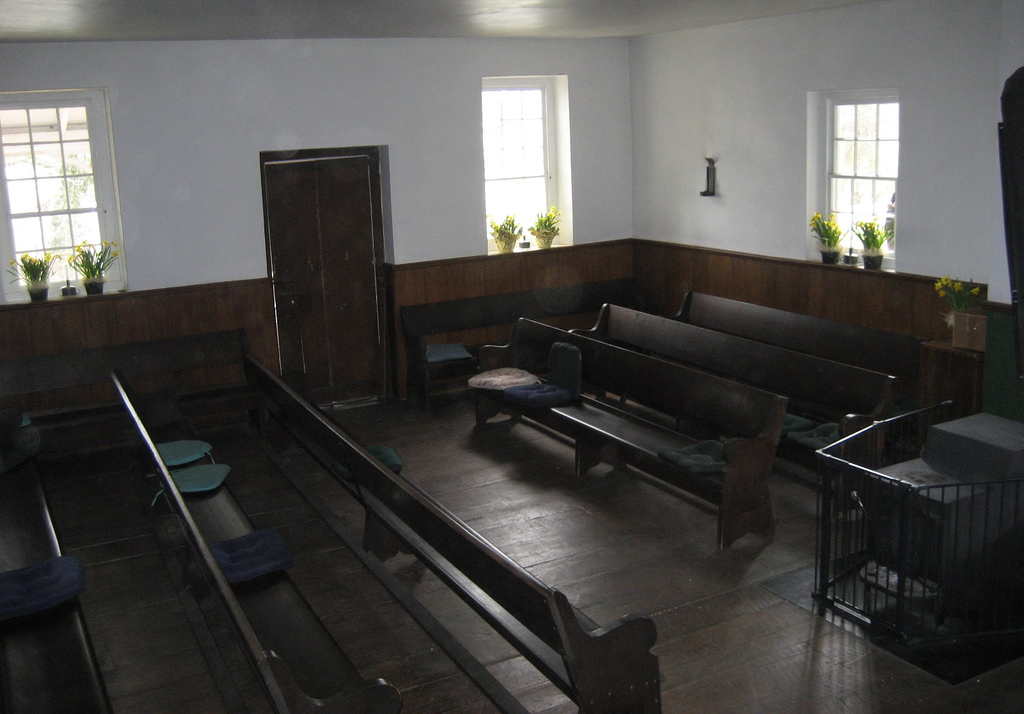
Centre Friend Meeting House, Centreville, Delaware

One of my early Quaker Friends, Jim, also left a lasting impression. When I invited him to share his personal story with my Psychology of Religion and Spirituality class, Jim said he’d be happy to do so – provided someone give him a ride because he didn’t own a car. As I pulled up to his house, I noticed his yard consisted entirely of vegetables and native plants. As thanks for the ride, when Jim entered my car, he offered me a big bag of freshly picked kale from his front yard, something he said he regularly did for friends and neighbors. In his quiet way, Jim also demonstrated a powerful expression of Quaker spirituality.

As a psychologist of religion and spirituality, I’ve long been drawn to learning from spiritual traditions that approach life in unique ways. Quaker spirituality, in particular, has offered me profound lessons into living a good life – insights that beautifully align with the emerging psychological science of well-being.

Here are four lessons that stand out:

1. Cultivate contemplative stillness.

“Seek to know an inward stillness, even amid the activities of daily life.”
—British Quaker Faith & Practice, Advices and Queries #3

Prayerful silence lies at the heart of Quaker spirituality. Quakers often seek to quiet themselves – alone, together, in nature – to be more anchored and present in daily life.  

Psychological research on contemplative practice reflects the wisdom of this, revealing benefits like reduced stress, deep rest, and improved health and well-being. Even a few minutes of stillness each day can make a significant difference.

Continue reading

How the “Inside Out” Movies and Quaker Advice Converge

After watching the record breaking film “Inside Out 2,” I wrote this piece for Friends Journal about how my personal journey with emotion relates to the science behind the movies and my spiritual quest. Friends Journal published it today.

4 Ways to Incorporate Spirituality Into Work

Do you want to bring more of your whole self to work? Psychological research suggests your work would benefit from incorporating aspects of personal spirituality.

“At its best, work provides us the ability to support ourselves and our loved ones, and can also provide us with a sense of meaning, opportunities for growth, and community.” So says the Surgeon General’s Framework for Workplace Mental Health & Well-Being.

As many of us know, however, work often doesn’t function “at its best.”

According to the World Health Organization, work burnout is characterized by being depleted or exhausted at work; feeling distant from one’s job, including feeling cynical about it; and reduced professional effectiveness. This appears to be increasingly common. For example, in a recent national survey of American workers, more than half (57%) report they are currently experiencing at least a moderate amount of work burnout.

Often times, work stress and burnout stem from factors beyond our control. But, is there anything we can do that would help us cope with work-related difficulties? Is there anything we can do to thrive?       

Something many of us haven’t really considered is how the spiritual part of our lives might relate to our work lives. Approximately 86% of American adults report being at least somewhat spiritual, and for those who have integrated spirituality into their work, studies suggests significant benefits. In a recent review of research, for example, workplace spirituality was said to have “significant potential to influence workers and organizations in meaningful ways, fostering integrated (rather than segmented) lives and giving rise to personal and organizational well-being.”

Below are four suggestions for how we might meaningfully incorporate spirituality into work.

1. Seek awe to cope with work-related stress and burnout.

As mentioned, work can cause considerable stress and even trauma that can lead us to feel burned out. Awe is an emotion many of us connect with our spiritual lives that can help. In fact, researchers consistently find awe diminishes feelings of stress.

So, before work, during a break, after our work day ends, or on time off, we can intentionally seek awe to cope. For instance, we can go into nature and purposely focus on whatever most strikes us as beautiful that gets us out of our current frame of reference. We can dedicate time to connect with a sacred text, using our imaginations to deepen the transcendence of the experience. We can go to a spiritual gathering or location sacred to us and mindfully focus on something vast that elevates us.

Awe practices such as these may shift our attention away from our selves and our troubles and help us to respond at work in more centered and effective ways.

Continue reading

Florilegium (I): Sermon on the Mount

Literally referring to a “book of sparklets,” the identification of “florilegia” is an ancient spiritual reading practice I’ve recently been exploring in my own life. Historically, this practice was performed by monks reading and praying the Psalms. Essentially, it’s a quote journal.

In this practice, as you read a sacred text, you look for sentences, phrases, or words that “sparkle” in the material. You then record those. When finished, you put all these separate quotes together to create a new text – a florilegium – that may allow the quoted material to take on new meanings, as each thought gets embedded in a different context than the original.

In engaging in this practice, it’s important to consider what text you consider sacred that you want to draw spiritual meaning from. To begin, I started my practice with Jesus’s Sermon on the Mount (Matthew 5-7, but I started with 4:12 for more context). What sparkled for me recently appears below. (If I had done this practice 10 years ago, or even 10 days ago, my florilegium may be entirely different!)

“When Jesus heard that John had been put in prison, he withdrew to Galilee” (Matthew 4:12).

“From that time on, Jesus began to preach, ‘Repent, for the kingdom of heaven has come near'” (Matthew 4:17).

“Jesus went throughout Galilee, teaching in their synagogues, proclaiming the good news of the kingdom, and healing every disease and sickness among the people” (Matthew 4:23).

“Now when Jesus saw the crowds… His disciples came to him, and he began to teach them (Matthew 5:1-2):

“Blessed are the poor in Spirit…
Blessed are those who mourn…
Blessed are those who hunger and thirst for righteousness…
Blessed are the merciful…
Blessed are the pure in heart…
Blessed are the peacemakers” (Matthew 5:3-9).

“Love your enemies and pray for those who persectute you” (Matthew 5:44).

“Do not store up for yourselves treasures on earth… But store up for yourselves treasures in heaven” (Matthew 6:19).

“Do not worry about tomorrow… Each day has enough trouble of its own” (Matthew 6:34).

“In everything, do to others what you would have them do to you” (Matthew 7:12).

For me, then, at least in this most recent reading, this florilegium summarizes what sparkled for me in Jesus’s Sermon on the Mount. To take this a step deeper, I could consider this and reflect on what individual sparklets or the overall message may mean for me and what actions I feel called toward.

6 Ways to Cope with Religious and Spiritual Struggles

In the 2023 song “God must hate me,” Catie Turner writes:

“Do you ever see someone and think ‘Wow, God must hate me’
‘Cause He spent so much time on them and for me, He got lazy
Got ample mental illness personality flaws
While their only flaw seems to be is that they have none at all…
I don’t know what I believe
But it’s easier to think
He made a mistake with me.”

Have you ever felt anything like this? Although religion and spirituality can be helpful to people, they also can be sources of stress or even trauma. These lyrics demonstrate the emotional power of what psychologists often term “religious and spiritual struggles.”

What is a Religious or Spiritual Struggle?

A religious or spiritual struggle involves a tension or conflict an individual may experience in relation to what they consider sacred. For instance, like in the song lyrics above, a person may feel angry, disappointed, abandoned, or rejected by God. Someone may wrestle with their beliefs or the ultimate meaning of their lives. An individual also may be upset by interactions they’ve had with others within religious or spiritual communities or feel hurt or offended by the teachings of a faith.

The Effects of Struggling with Religion and Spirituality

Research conducted across a variety of contexts and groups consistently reveals how religious and spiritual struggles predict poorer mental and physical health. For instance, individuals who report more religious and spiritual struggles also tend to report more anxiety, depression, and suicidality as well as lower satisfaction with life and overall happiness.

Experiencing religious and spiritual struggles may also underlie why many people disengage from a religion, an increasingly common occurrence. For example, people may withdraw from a religion when they feel negative emotions toward God, such as in the lyrics that opened this article. As another example, individuals may pull back from religion if they experience judgment from others or disagreement about political issues in their religious community as well as when they feel dissonance about belonging to a group they feel has perpetrated prejudice or violence.

Given all this, what could help people wrestling with stress and trauma associated with religion and spirituality? Below are six suggestions informed by the research on this topic.

6 Ways of Coping with Religious and Spiritual Struggles

1. Realize you’re not alone. Experiencing religious and spiritual struggles appears fairly common. In one study, for example, when a national sample of adults were asked to name a specific religious or spiritual struggle they experienced in the past few months, about 40% could do so. Furthermore, many of the heroes of religious faith – from Job to Jesus to Mother Teresa, in the Judeo-Christian faith, for instance – also struggled with matters of the sacred. Realizing this may help decrease the sense of guilt, shame, or moral unacceptability you may feel.  

Continue reading

Is God Replaceable?

In recent years, many of us shifted our approach to religion and spirituality. Particularly in places with more resources, such as certain regions of the United States and Europe, religion generally became less popular.

As a team of psychologists of religion led by Julie Exline recently noted, shifts away from religion occur in at least three forms. First, an individual may be “done” with religion entirely. That is, they may no longer consider themselves religious and may no longer affiliate with a religious community at all. Second, a person may continue to identify as religious, but may pull back their involvement. For instance, someone may decrease attendance at religious services or spend less time reading religious texts. Third, an individual may disengage from their religious identity and religious participation and instead focus on spirituality.

New Ways to Meet Ancient Needs

In his book, “The Power of Ritual,” Casper Ter Kuile explores and advises on this third possibility. He argues that, though many people in the developed world became less religious in recent years, the underlying human needs that religion addresses continue to be vital for human flourishing. Ter Kuile writes:

“It may be helpful to think of the human longing that leads to religious culture as akin to music and the music industry, which has struggled mightily over the last twenty years, with CD sales in free fall for much of the 2000s and 2010s. But our love for music still endures… The same thing is happening in our spiritual lives… Attendance at congregations is down, but our hunger for community and meaning remains.”

In light of this, Ter Kuile puts a spotlight on something many of us may not have noticed: the creation and surge of engagement in what could be called spiritual “replacements” for religion. He continues:

“Formal affiliation is declining, but millions are downloading meditation apps and attending weekend retreats. Moreover, they find spiritual lessons and joys in completely ‘nonreligious’ places like yoga classes, Cleo Wade and Rupi Kaur poetry, and accompaniment groups like Alcoholic Anonymous and the Dinner Party… Stadium concerts and karaoke replace congregational singing, and podcasts and tarot decks replace sermons or wisdom teachings.”

Ter Kuile then notes some of the possibilities in this new era. Individuals can “unbundle traditions” and “remix them” with sacred rituals that build community and create meaning. In line with this, along with Vanessa Zoltan, Ter Kuile created the popular podcast “Harry Potter and the Sacred Text” as a way for individuals to virtually gather and ritually share a close reading of a beloved book series.  

As another example, I recently went for a hike in my local state park in Afton, Minnesota. Following Ter Kuile, as I left my car, I powered down my phone to more intentionally connect with the natural beauty I encountered. I then made a point to look for a tree in the park to connect with, a tree I decided would be old and gnarly, one that stood out from the rest. I found one matching these criteria overlooking the St. Croix River, and I mindfully walked around it three times in a kind of sacred gesture to both appreciate the tree and ritualize its significance. Next time I hike at this park, that tree will surely have added meaning for me.

Questions about Spiritual “Replacements”

There’s plenty of research evidence to show that increasing community and meaning contribute to positive life outcomes such as enhanced well-being. I do wonder, though, whether these spiritual “replacements” could start generating their own doubts and questions for people. For example, what really constitutes a “sacred” text? Is Harry Potter sufficient? Would Mary Oliver’s poetry or some other text be better?

Continue reading

One Insight from Indigenous Spirituality that Promotes Resilience

On February 1, 2012, American Indian Studies Professor, David Mathieu, received the call that is every parent’s worst nightmare. David’s beloved daughter, Felicity, had suddenly died when her car collided with a semi-truck on an icy, two-lane, highway in rural southern Minnesota. She was only 27 years old.

Like anyone who has lost a loved one like this, David struggled mightily with grief. He wrested with questions such as:

“Should we have done something different that would have avoided this accident? Who was at fault? What did we do wrong? Why did she choose to live in a rural area with dangerous roads? How could this happen? Was she or were we being punished? What was the role of God in this tragedy?”

In the aftermath of this horrific event, David’s long-time study of Lakota spirituality – particularly conversations at the Cheyenne River Reservation in South Dakota with medicine men Sidney Keith and Martin High Bear – took on new significance.

A central facet of Lakota spirituality is the concept of Wakan, translated as “Mystery.” In his book, “Way of Wakan: Reflections on Lakota Spirituality and Grief,” Mathieu explains:

“Wakan is, at its core, an ambiguous, yet very honest, explanation of why we cannot understand a reality we desperately wish we could. Wakan, then, is a spiritual ‘position’ on which to base an understanding of one’s spiritual and physical world as well as the relationship between the two.”

Acknowledging the Mystery of the situation helped David with his initial questions and urge to blame someone or something for his daughter’s death. He elaborates:

“Everyone from the driver of the semi-truck, to inadequate roads in southern Minnesota, to the whole area where she lived, and even to Felicity herself for not paying attention to her driving, not taking precautions, seemingly not caring… Blame has no place when all is Wakan and unknowable.”

What seems uniquely powerful about this reliance on Wakan is the humble recognition that some things are simply unknowable to us humans. To suggest anything otherwise would, in fact, be considered presumptuous. Some things just happen, and desperate as we are to find answers, we can’t really know why. This isn’t just a practical perspective in Lakota spirituality; the lack of knowing itself is deemed Sacred. As David writes:

Continue reading

How Contemplative Practices Promote Health and Well-Being

In a review of everything currently known about the topic, researchers recently developed a scientific model of how contemplative practices of various kinds may encourage better physical and psychological health. Published in Psychological Review, one of the flagship academic journals of the American Psychological Association, this new model advances our understanding of the adverse effects of stress and what can be done to combat it.

The researchers note there are four primary stress-related states we all experience: (1) acute stress (example: arguing with a spouse), (2) moderate threat (example: working), (3) rest (example: watching TV), and (4) deep rest (the least studied of the four, but most beneficial). Although many believe that rest is our baseline, default state, the scientists in this article suggest that, in the United States (and, by extension, in other developed countries), most adults now spend most of their daytime hours in moderate threat arousal, which drains of us of the restorative energy we need to function at our best. In fact, considerable research conducted over many decades demonstrates that this level of chronic stress contributes to various physical and psychological health problems ranging from heart disease to immune suppression, from chronic pain to depression. Individuals from marginalized groups seem particularly likely to experience this degree of toxic stress, helping to explain some of the health inequities we observe in certain groups such as people of color and individuals with poor economic resources.

Whereas acute stress and moderate threat cause sympathetic nervous system activity, deep rest is characterized by the dominance of the parasympathetic nervous system. The parasympathetic nervous system basically calms us. The researchers in the Psychological Review article further speculate that deep rest may be uniquely restorative at a cellular level. In this way – though there are surely limits – deep rest may be physically and psychologically “healing.”

Although there may be several activities that promote deep rest and enhance the body’s restorative capacity, most emphasized in the article is how contemplative practices may play a unique role. As noted by the authors, “contemplative practices are mind-body exercises that are intentionally practiced to work toward inner well-being, psychological flourishing, and deep connection with self, the world, or a higher power.” Examples of such practices include deep prayer, chanting, meditation, yoga, Tai Chi, and Qigong.

Continue reading

Rediscovering a Religious or Spiritual Life

Many of us are frustrated by religion. According to the General Social Survey – a large, representative survey done every few years for the past several decades – the number of Americans who say they have no religion increased from 5% in 1972 to 29% last year, for example. The COVID-19 pandemic also provided a pause from religious attendance that allowed many of us to take a step back and reconsider how we really feel about our religious beliefs, practices, and commitments.

Why are so many people “done” with religion? Researchers in one study asked individuals who said they were once – but no longer – religious to write about their primary reason for the change. By far the most common reason (52%) was intellectual, such as when a person felt their previous religious beliefs conflicted with science or logic, or when they felt they simply “outgrew” their old beliefs. Another common reason (22%) was because individuals said they didn’t feel they could be a part of an institution they felt caused trauma to themselves or others or that they believed perpetrated hatred toward certain groups, such as members of the LGBTQ population. A third reason (15%) was because people experienced personal adversity they couldn’t reconcile with their religious beliefs. Finally, some (11%) noted social reasons, such as feeling like they didn’t “fit in” with a religious community.

Research suggests “religious dones” tend to have a history of religious and spiritual struggles but that these struggles often lift when they form a non-religious identity. On the other hand, studies show how, in religious settings and groups, formerly religious people often hide their newfound beliefs and values, again feeling a lack of belonging. In addition, a good deal of research points to the significant positive resources provided by religion and spirituality. Relinquishing these resources may come with some long-term costs. For instance, doing away with all of our religious and spiritual customs may mean our children do not experience several significant rituals or rites of passage that aid in their development.

It’s not healthy to suppress our struggles with religion. Are there ways to be honest with our frustrations while still pursuing a religious or spiritual dimension to our lives? Below are five ideas for how we might do so.

1. Go deeper into religion.

Sometimes, there are resources in our religious traditions that can help us work through our frustrations. For example, many religions have insightful analyses of how faith and science can be integrated. Traditions frequently have resources for helping us reconcile the suffering we’ve experienced with our religious beliefs. A deeper exploration often points to how our religious frustrations are rooted in how religious teachings are commonly interpreted and practiced – frequently by people less informed – instead of the best a religion has to offer. In this way, digging further into religion can be the spark for personal growth and deeper understanding.

Continue reading

5 Ways Religion Is Better than Spirituality

I’ve taught a course in the Psychology of Religion and Spirituality for about 20 years. As part of this course, I often invite speakers to share their religious and spiritual life stories and insights with the class. One of the most provocative perspectives ever shared came from a Jewish speaker. To paraphrase, he would say:

I know many of you consider yourselves more spiritual than religious, and I know there are many benefits to personal spirituality. However, I have a different take on this. I believe religion is better than spirituality. And I believe this is increasingly so.

The Meaning of “Religion” and “Spirituality”

Although these concepts prove extraordinarily difficult – if not impossible – to adequately define, let me clarify terms as much as possible. In general, religiousness entails behavior concerning the Sacred consistent with what an institution prescribes. Spirituality, in contrast, involves an autonomous question for what is true and meaningful regarding the Sacred, whether inside or outside an institutional context.  

Thus, religiousness and spirituality are different but overlapping constructs. Religiousness involves action that harmonizes with a group’s teachings and customs to a greater extent. Spirituality focuses more on an individual’s personal and experiential quest. Common to both religiousness and spirituality is the Sacred: something that lasts forever or that evokes awe or reverence.

The Trend Toward Spirituality

Various surveys in the United States regularly ask respondents to select which of four options best describes them: (1) both religious and spiritual, (2) spiritual but not religious, (3) religious but not spiritual, and (4) neither religious nor spiritual. Results consistently show how respondents are most likely think of themselves as “both religious and spiritual.” However, individuals in these studies increasingly identify as “spiritual but not religious.” For instance, in nationally representative surveys of American adults from the Fetzer Institute, those indicating they were more spiritual than religious rose from 18.5% in 1998 to 33.6% in 2020.

Kevin Bluer | Unsplash

Five Unique Benefits of Religion

Some might consider the notion that religion has unique psychosocial benefits – compared with personal spirituality – offensive or, maybe ironically, “sacrilegious.” However, particularly at this moment in time, in our culture, consider the following:

Continue reading