It’s been another year for the books. Somehow, in the midst of everything, more and more people seem to be following this blog.
As a way to review the year, below are my most-read articles that I wrote during 2021. If you haven’t had a chance to read these articles yet, you may be interested in checking them out.
How do we motivate those under our care to do what’s in their best interest? This is a question many of us – we who are supervisors, parents, teachers, coaches, or other kinds of care providers – regularly ask ourselves. So often individuals could do so much if they could just find the needed motivation.
For example, I teach Psychology courses to first and second year college students at a large, diverse community college. Although I suspect many of my students have the potential to thrive in school and in their future professional lives, a substantial number fail to follow through with their intended plans. At the classroom level, many don’t attend class, complete their homework, or study sufficiently well for exams. As a result, their grades suffer, and many withdraw. This occurs more frequently among students of color.
Beginning with my involvement in an intrinsic motivation research lab at the University of Wisconsin about 30 years ago, and later continuing with my dissertation research on goals at the University of Minnesota, I’ve long been fascinated by the science of motivation. As some scholars have recently described, much of what is known about motivation can be summarized in the following way:
I’m very excited to help host a Zoom talk by Dr. Tanya Luhrmann, Professor of Anthropology and Psychology at Stanford University, on Tuesday, October 5, from 1:00-2:15 p.m. CDT. Dr. Luhrmann is a one-of-a-kind researcher, the only scientist in the world really exploring connections among spiritual experience, psychotic experience, personality, and culture. This event is free and open to the public! Sign up at Eventbrite below to receive the Zoom link and more information.
The challenges of this time humble me as a science writer and educator. As I participate in discussions about many of the most serious and pressing problems now facing our country and world – problems ranging from vaccine hesitancy to racism, from race relations to climate change – one overarching meta-problem frequently recurs. Coming from different universes of information and social comparison, we don’t agree on the relevant facts.
Theodore Parker once stated that facts are “true, independent of all human opinion.” That is, although we may have wishes for what’s true, previous beliefs about what’s true, and groups telling us what’s true, none of this compares with what’s actually true. Reality has a life of its own.
In the past, we could at least sometimes come together as a people, even if we disagreed on initial solutions to problems, because we agreed on relevant facts. This has largely changed. As a result, we are increasingly polarized and fractured, often incapable of consensus, compromise, civil discourse, and creative problem-solving.
One of the purposes of education is to prepare us to be able to separate fact from fiction. Since many of the problems noted above concern questions about how the world works, science education, in particular, seems at least partly to blame.
What do we need to be able to do to think critically, especially in the scientific realm, as we wrestle with the problems of this time? Below are six essential skills we need as citizens, at least as a start.
What do you do when you face a stressful life event? Strategies obviously vary, ranging from getting drunk to binging on Netflix to talking with a friend. Individuals differ in their habitual responses to stress, and these differences significantly impact well-being.
I’ve realized as of late how I often deal with stress by seeking a source of awe, something vast that stretches the sense of what’s possible in the moment. The experience of awe seems so distinct from the experience of stress, but reflecting on the intersection between my life experience and some new research just published by the American Psychological Association, I’m realizing how this response contributes to the ability to successfully cope with difficult times.
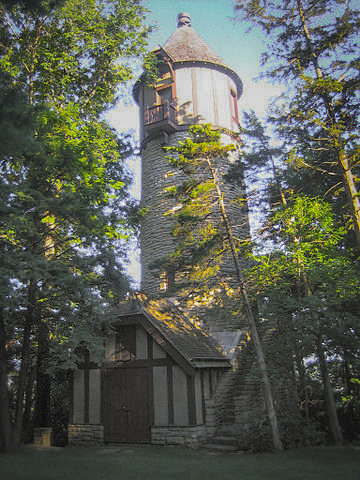
For instance, a few weeks ago, while a loved one underwent a long and intense surgery at one of the Mayo Clinic hospitals in Rochester, Minnesota, my wife and I decided to go for a walk. Whereas our feeling inside the hospital involved fear, agony, and dread, the simple act of getting into the sunlight and seeing the nearby trees brought us some calm. We eventually came across signs pointing us to the Plummer House – former home of Mayo partner and founder Dr. Henry Stanley Plummer – so we walked in that direction, ultimately finding the breathtaking English Tudor mansion. We explored the grounds but came to a stop, transfixed, at one of the most unusual buildings we’d ever seen – actually the old water tower for the mansion – but which my wife and I referred to as “Rapunzel’s Tower.” The architecture of the tower truly “blew our minds” for what was possible with a building, and we were lifted out of our troubles for just a moment. When our attention came back to ourselves and the situation at hand, we returned with greater clarity, strength, and connection to face the difficulties to come.
Watertower at Plummer House, Rochester, Minnesota
In a recent article, six studies demonstrated how awe experiences diminish feelings of stress. For instance, in one study, participants were brought to the top of a 200-foot clock tower on the campus of the University of California at Berkeley. Half were randomly assigned to the awe condition, which involved gazing out the tower upon the Bay, San Francisco, and the Golden Gate Bridge; the other half were randomly assigned to a control condition, which involved gazing upon the inside of the tower. Although both groups experienced less stress associated with the hassles they reported having than before being brought to the tower (consistent with research showing the stress benefits of taking a walk outside), individuals in the awe condition, in particular, experienced greater reductions in stress, compared with individuals in the control condition. In part because of this, participants in the awe condition also reported higher satisfaction with their lives.
Why does awe decrease stress? Based on their results, the researchers suggested that:
As my wife and I walked from the front doors to the worship center of the exponentially growing church we used to attend in the mid-1990s, we often remarked how much relational tension filled the hallways. Young couples frequently walked together in silence, their faces sometimes providing brief glimpses of the irritation they felt toward each other. Moms and dads regularly yelled at kids to get them to Sunday school. Friends and acquaintances mostly kept to themselves.
People had good reason for waking up early on a Sunday morning to pack the auditorium. The young preacher challenged us with mind-stretching insights that directly applied to our lives. The band led us into worship experiences that connected us with God in ways that melted our selves into something larger.
During these times of shared praise, in particular, emotion poured out of many. I often cried during songs, for example, tears pouring down my face. Sometimes, I’d be unable to continue singing, in fact, feeling so “choked up.” There were even a few times when I felt so overwhelmed I had to physically brace myself with the chair in front of me because I was literally “weak in the knees.”
When we left the worship space, my wife and I frequently commented how those around us seemed palpably different than when they arrived. Not everything was perfect, of course, but tension had lifted. Young couples looked more in love, holding hands on their way out the door. Families played. Others welcomed conversation over coffee and donuts.
If this had been a one-time occurrence, I may not have thought much of it. But, it was so predictable, it was almost comical. Pretty much every week, the same basic story unfolded: people were being transformed.
Maybe the most notable observation we made, though, at least in retrospect, occurred when we left the church building and walked back to our car. The parking lot typically was much fuller than when we arrived, and we often were struck by the range of political bumper stickers. Frequently, we’d see people part ways in the parking lot with a handshake or hug, only to enter cars with stickers suggesting different political affiliations.
As a young Ph.D. student studying Psychology at the University of Minnesota at the time, I wondered: what might help account for the powerful positive effects we were observing? Nothing in psychological science seemed capable of providing a good explanation.
Before this year, from December to March, I spent most of my adult life inside. During these months in Minnesota, where I live, high temperatures typically remain below freezing, and it’s not uncommon to wake up to a reading of below 0 degrees Fahrenheit, not counting “wind chill.”
Although I intentionally exercised several times per week, much of this time in previous years was passed in my gym where I watched old episodes of Friends while artificially bounding on an elliptical machine. This felt easier. When I considered going outside, images came to mind of my whole body shivering uncontrollably, my face becoming numb, my fingers and toes feeling like they might be seriously frostbitten, my nostril hairs freezing as I breathed in the cold, dry air.
With COVID-19 cases surging as we entered the winter months this year, I faced a clear choice: (1) continue the comfortable routine of previous years by working out inside my gym, knowing this would mean I would more likely contract and spread the virus, or (2) extend my summer and fall habits of exercising in the great outdoors. Favoring public health, I decided on the latter: I put my gym membership on temporary hold, and with some trepidation, I planned for a winter of outdoor adventure.
I’m now a few months into this new lifestyle. Some days, I walk or hike on paths near my home, aided by the most marvelous invention I never knew to keep myself from falling on the snow and ice: Yaktrax. Other days, when I have more flexibility in my schedule, I practice my classic ski technique at a local park or snowshoe along the pine tree-lined trails of my favorite local nature center. Weekends provide opportunities for more extended travel or adventure, such as half-day trips to formerly unexplored or underexplored Minnesota State Parks.
A few insights have been essential to making this work. First, I have new appreciation for the Scandinavian saying: “there’s no such thing as bad temperature, only bad clothing.” Although it was an investment, purchasing high-quality outdoor clothing from REI has been well worth it in terms of comfort in the cold. (There is a point where I “draw the line,” though, and for me that’s 0 degrees Fahrenheit, below which I move my body inside.) Most importantly, I’ve needed to shift my attitude toward winter. Inspired by recent psychological research by University of California – San Francisco researcher Virginia Sturm and colleagues – showing increased positive emotions and decreased emotional distress when individuals engage in regular “awe walks” – I’ve changed my focus from efficiency in exercise to getting lost in wonder as I look for what is vast, unexpected, and unique outside. If the conditions are right, I’ll also sometimes bring my camera to see if I can photograph some of the beauty around me.
Sometimes, after dinner, the dishes washed and the kitchen reasonably cleaned, a window of time opens. My family disperses into their various corners of our home, allowing me to settle into the living room. I switch into comfortable clothing and I wrap myself in the soft, oversized blanket my wife gave me for Christmas.
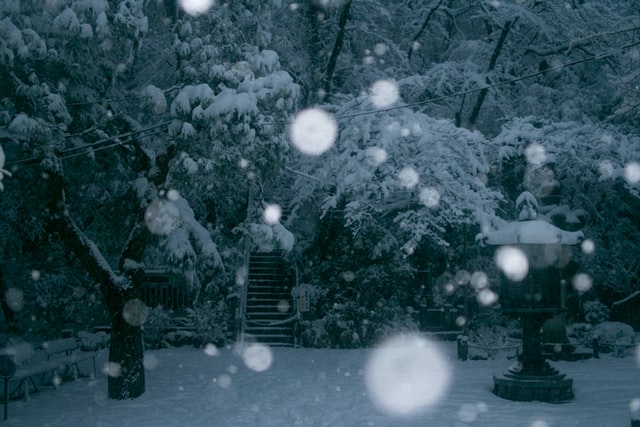
Tonight, I look outside, into the darkness, where the only light comes from the faint glow off the newly fallen snow. I listen to the breeze shaking the trees, rattling the house, causing the chimney to whistle.
Unsplash | Takemaru Hirai
During an awful pandemic that mostly restricts, in the midst of a Minnesota January, freedom can sometimes be found. There are options for what to do I don’t remember always having.
There are times when I light a fire in the fireplace and drink some herbal tea before settling into some pleasure reading, writing, or Netflix. Occasionally, a family member joins me for a game of Yahtzee or Quirkle. Some nights I go upstairs and settle into my tub, surrounded by candles, smells of lavender, and classical music played by Alexa.
In the past, I probably would have interpreted these unstructured, unplanned, unexciting nights as “boring.” However, I’m now finding power in reframing them as opportunities to “settle.”
It’s been quite a year. With all the losses of 2020, one plus has been more time for me to write. Many new people started reading and following the blog this year, and for the first time, I’ve published several excellent guest blogger’s posts. Along with everyone else, the COVID pandemic was top of mind for me, and that was reflected in the themes of my writing.
As a way to review this year, below are the top posts of 2020 on this blog. If you haven’t had a chance to read these articles yet, this might be an interesting time to do so.
This is a personal confession with some of my struggles with church and religion, in light of new research published this year on people who are “done.”
This was, by far, the most popular post on the blog this year. It revisits themes of posts I wrote years ago, but seemed to find new popularity – particularly in South Africa – in light of students made to learn at home.
***
Unsplash | Immo Wegmann
Reviewing this year in writing like this makes me wonder about what themes and developments will arise in 2021. Hopefully one of hope!
As more and more people read this blog, I get increasingly asked by others if they can write a guest post. I have almost always declined, but this post below by Magdalyn Fiore really caught my eye, maybe because I’m a godparent to three wonderful boys but also because I’ve never seen anyone write anything about this topic before. Hope you enjoy!
~Andy
***
It’s Sunday morning and you’re standing at the front of the church beside the baptismal font. The air is cool and the entire building is lit by sunlight shining through stained-glass windows. Everyone in the pews is silent, smiling, and the only sounds you hear are the words coming from the Pastor and the cries of the baby in their careful arms.
“Are you ready to help the parents of this child in their duty as Christian parents?” the Pastor asks.
“We are,” you proclaim.
Congratulations! You have just become a godparent. But what does it mean to be a godparent? What role do godparents play throughout the child’s life, particularly as they grow into young adulthood, when godparents may be needed most?
***
The tradition of godparents, or sponsors, originated in Judaism through the ancient custom of brit milah, a circumcision ceremony after the birth of a baby boy, during which a sandek, or “companion” in Hebrew, would hold the baby. The ceremony of baptism incorporated a similar tradition through godparenting after Christianity emerged. A godparent pledges to act as a life-long support for the baptized infant (or adult) to help them live a Christian life and fulfill religious obligations, such as attending church services and receiving other sacraments. Across different Christian religions, godparents commit to helping raise a child in a religious context, particularly if the child’s parents neglect the responsibility. They vow to be a source of information and guidance throughout their godchild’s entire faith journey, including as the child grows into emerging adulthood.
Emerging adulthood is a period of development roughly between the ages of 18 to 25 years, during which time individuals tend to self-explore and self-reflect about many topics, including religion and spirituality. It’s a ripe time to ask questions about the faith tradition they grew up in and its relevance as they transition into adulthood. But as emerging adults begin to question and explore religion, their relationships with their godparents often don’t live up to their original promise, with godparents frequently abandoning the opportunity and responsibility to spiritually mentor their older godchild.
According to developmental scientist, Caitlin Faas, many emerging adults don’t even know who their godparents are, and the relationship is often overshadowed by other roles the godparent plays in the person’s life, such as aunt or uncle. At best, the young person might receive an extra present from a godparent at Christmas or on a birthday, but something deeper and more meaningful rarely emerges.
“Emerging adults are questioning their own religiosity more,” Faas says. In fact, according to the National Longitudinal Study of Adolescent to Adult Health, 40% of young adults experience either a definitive or temporary decline in religiosity between adolescence through young adulthood, while just 10% report an increase in their religiosity. “So as that’s happening,” Faas continues, “do they feel like it’s a safe space to talk to their godparent about that?” She adds that as godchildren grow older, godparents—and older adults in general—don’t have clear societal roles laid out for how to connect with that age group, and that we tend to think 20-year-olds don’t want to talk to their godparents. “They probably do,” she assures. “But are you going out of your way to reach out to them?”
Unsplash | Ben White
In many cases, this hesitation to reach out to godchildren as they age may reflect something about the godparents’ own religiousness and spirituality, Faas says. “Are godparents able to have those difficult conversations about spirituality with their godchildren who are 20? Will they take the time to figure out what their own spirituality means? Most adults haven’t even figured it out – if you really want to get deep into, ‘Well, why do you go to church?’ Can most adults answer that question?” To truly be prepared for deep spiritual discussions, Faas urges, godparents must be open to hard questions and dig deeper into their own religious and spiritual convictions and behaviors.
Emerging adults don’t always know where to turn for answers to their complex questions, especially when their godparents are not practicing the faith or are not involved in their life. According to a national study conducted by Springtide Research Institute (The State of Religion & Young People 2020), more than 1 in 4 individuals aged 13 to 25 know only one or fewer adults they can go to when they need to talk. Looking even closer, only 50% of those who don’t have any adult mentors say their life is meaningful and has purpose; however, when young people have just one mentor, 70% say their life has meaning and purpose. This percentage continues to increase overwhelmingly the more mentors a young person has, which reflects the importance of trusted adults in their lives, especially as they seek belonging and navigate questions regarding meaning and identity.






 Andy Tix