Category Archives: Personal

What To Do When Stressed

A few weeks ago, while watching old episodes of Grey’s Anatomy on Netflix before going to sleep, I noticed my right eye felt drier than usual. I tried different tactics to adjust to this and fix my dry eye problem, but none really worked. Then, one morning, I woke up to find this same eye felt kind of sticky. It would improve after a few minutes of heavy blinking but, about a week later, I noticed it felt grittier when I blinked. A few days later, my left eye was starting to show some of the same symptoms, and also was bloodshot. How aggravating. I then discovered some kind of yellow-headed growth on the underside of my upper eyelid of my right eye. What was that? I found that thoughts and worries about my eyes started to interfere with my ability to be fully present in my daily life. I was distracted and less effective than usual.

My eyes are on the mend now. I went to my trusty eye doctor who prescribed a few eyedrops everyday, and the inflammation she discovered is going away. The yellow-headed growth? A benign calcification. So, everything is good, really, and my problem only illustrates a minor inconvenience. Nonetheless, this story illustrates how even one small stressor can negatively influence someone’s life.

Anything requiring a new response can be stressful. Stressors can involve loss, challenge, the anticipation of loss or challenge, or even something positive. In the classic social readjustment rating scale, stressors range in severity from minor (such as a speeding ticket or major holiday) to major (such as divorce or the death of a spouse). Traumatic life events can be even worse.

When we experience stress, our sympathetic nervous systems are activated. Our bodies direct stress hormones such as adrenaline to respond. Salivation decreases, perspiration increases, breathing quickens, heart rate accelerates, digestion slows, blood pressure increases, and immune system functioning lessens. Although this fight-or-flight response often protects us when we face an immediate, tangible danger, it causes problems when chronically activated, as typically is the case with modern stressors. This helps explain why many distressed individuals regularly experience symptoms such as dry mouth, sweaty palms, labored breathing, irregular heartbeat, nausea, high blood pressure, and vulnerability to sickness. Problems such as headaches, depression, and heart disease all become more likely as a result of chronic sympathetic nervous system activation.
Continue reading

Unsheltered

When I look backward into my youth – forward all the way to today – I observe an undeniable, constant strand: Part of my identity is that of being a learner and a teacher.

Of course, there are many ways to be a learner and a teacher (two sides of the same coin for me, anyway). Right now, in my life, for example, I a professional teacher, a college professor. However, I also learn and teach at church (as I did recently in leading a group on gays and the church), as a parent, and even sometimes as a friend. This blog post, in fact, is also an act of learning and teaching for me, as it involved reading, thinking, and now sharing. Others learn and teach in their roles as managers, coaches, crew leaders, volunteer leaders, mentors, and pastors. Learning and teaching are roles many of us play in everyday life.

Continue reading

Gays and the Church

Although the Supreme Court’s landmark 2015 ruling in Obergefell vs. Hodges seemed to settle many civil issues about same-sex marriage in the United States, the topic remains contentious in many religious communities. In recent years, some denominations have broken with the historical Christian view that same-sex relations “miss the mark” and have become more LGBTQ affirming. Many have not, however, meaning they will not support “unrepentant” same sex sexual behavior or same-sex marriage in their churches.

From February 23-26, 2019, another major denomination will meet to discuss its official stance about same-sex relations, as leaders in the United Methodist Church will convene in St. Louis, Missouri to discuss “a way forward.” The plan recommended by the Methodist Council of Bishops would allow local decision-makers to implement policies about matters such as same-sex marriage that best fit their social contexts. If approved, this would enable more progressive districts to support the ordination of gay and lesbian Pastors and marry same-sex couples, subject to the conscience of the local pastor, while allowing more conservative districts to remain unchanged in policy and practice.

At play in these deliberations are questions of how to know what is true about matters of faith. The founder of the Methodist tradition – John Wesley – proposed four “ways of knowing,” now organized in what is popularly termed the “Wesleyan Quadrilateral:” experience, reason, tradition, and Scripture. Basically, Methodists look for “converging evidence” in these four domains when creating church policy, although Scripture is prioritized.

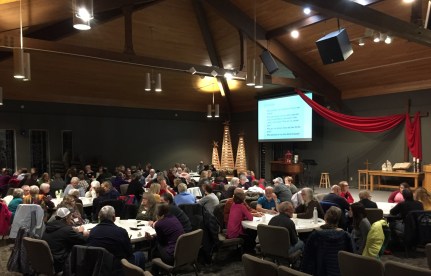
Gays_2In anticipation of the denomination’s upcoming meetings, I have led a discussion group at my local Methodist church exploring same-sex relations, using the Wesleyan Quadrilateral as an organizing tool, for the past six weeks. Members of my church community have discussed their experiences with gays and lesbians, we invited several gay Christians to our group to listen and learn from their stories, and we have explored Scripture from both conservative and progressive perspectives. As a facilitator, my charge was to lead this group neutrally, meaning I have not shared my opinion very often, I have tried to make sure the best of materials are shared from both conservative and progressive viewpoints, and I have sought to create an atmosphere that is hospitable and conducive to honest, respectful conversations among individuals who often disagree.

Continue reading

Letter to a Middle School Student

Last week, I was delighted to receive this Letter from a Middle School Student asking for my thoughts about the meaning of life. My response is below. I think this brings together several elements of my thinking.

***

Dear Jasmine,

It was a pleasure to receive your letter. I am grateful for the opportunity to participate in the great tradition of letter writing with you.

I share your interest in the meaning of life. In fact, probably most of us ask ourselves about the meaning or purpose of our lives at some point.

I think there probably are three ways to think about this. The first is about the Meaning of Life overall. Questions that fall into this category include: Why is there life at all? What are the origins of life? What happens after we die? What does it mean that we live in a universe where there is life? The second way to think about this is more personal. Questions include: What does my individual life mean? What is my unique purpose? What am I going to do with my “one wild and precious life?,” as the recently deceased poet Mary Oliver put it. The third way is to approach the question as a psychological scientist. Following this, we could ask ourselves how we might measure the perception of meaning in life, in general, and then consider how to perform scientific studies seeking to uncover what predicts the experience of more or less life meaning in a broad group of people.

Continue reading

My Journey with the Bible

I’ve written some personal essays before – these on death and the relationship between science and faith are examples – but below is maybe the most personal essay I’ve ever written. It technically is a narrative essay – focusing on my lifelong experience with the Bible – and I developed it through the help of some amazing folks at the Loft Literary Center in Minneapolis. Our teacher at the Loft encouraged us students to submit our work to literary publications, and I sent mine to a very cool Christian literary magazine called Ruminate. I was so honored when they accepted!

Anyway, here it is. I’d love to hear your reaction.

My Journey with the Bible


Six Forms of Resolution

As we begin a new year, many of us find ourselves in a bit more contemplative mood than usual. What were our highs and lows in 2017? What do we want for 2018? We all could use some clarity to live our best lives.

Sometimes, we’re waiting for clarity to strike us from the outside, maybe in the form of a sign or revelation. But more often than not, the clarity we seek is already within us, waiting to be discovered.

When I was a Sophomore in high school, I started to connect with my own unclarity. What was I going to do with my “one wild and precious life,” as Mary Oliver put it? A friend gave me a copy of Anthony Robbins’ “Awaken the Giant Within,” a book I generally now regard with great skepticism, but nonetheless that helped change my life.

Eventually, I found my way to a chapter on goal setting. Like most everyone, I had been taught I should set goals for my life. But just like how I had also been taught I should dust my room and floss my teeth, I wasn’t particularly motivated to do so. Goal setting just seemed painful, with no clear benefit. So, when I started reading the chapter, I was surprised to find a quote from Carl Sandburg: “Nothing happens unless first a dream.” I had never thought that goal setting may be more akin to dream identifying. I continued to read:

“Are you ready to have some fun? Are you willing to be like a kid again and let your imagination run wild?”

The tone caught me off guard. Maybe goal setting wasn’t like dusting my room or flossing my teeth.

I then was led on a series of tasks in which I dreamed what I wanted to create in my life. I brainstormed for 5 minutes about four areas each: personal development, career / economics, adventures, and contributions. Ultimately, I identified the most important one-year goal in each area.

The effects of this exercise on me can’t be overstated. It brought me clarity for the first time in my life. I had been a mediocre student, for instance, often struggling in difficult subjects, sometimes getting into trouble with my dad because of earning a “D.” But, during my goal setting session, I decided I wanted to be an “A” student. From that point forward, that’s exactly what I made happen. I earned straight “A”s through the rest of high school. This allowed me to enroll at the University of Wisconsin at Madison, where I continued being an “A” student. This, in part, allowed me to get into a top-rated Counseling Psychology program at the University of Minnesota. My future opened before me. And it all started with a goal.

Continue reading

The Psychology of Religion

One of my first memories happened at church. We always seemed to arrive early enough to say the rosery, but this one particular Sunday morning, my mom, brother, and I were late. We double-timed it up the concrete stairs to heave open the austere metal doors of the traditional red brick Catholic church only to find the sanctuary doors to be closed. It seemed we were not allowed entry because of our tardiness, so we were confined to a small, cold foyer filled with nothing to look at but posted advertisements for local businesses and two holy water stations. Being only 4 at the time, I quickly became bored. A hymn had started, and I snuck a peak through the closed passageway. The congregation was being led in song: “Here I am, Lord! Is it I, Lord? I have heard You calling in the night! I will go, Lord, if You lead me!…” Powerful words, I thought, and yet I observed no sign of emotion among anyone in the church. Much of the congregation didn’t even sing along.

The fact that I so clearly remember this incident reveals something about my strong religious and spiritual inclination. But the incident also raised a question for me that has become the focal point for much of my professional life: What explains why some people are more religious than others?

Continue reading

Religious and Spiritual Struggle During Adversity

Marian Fontana was living a good life. She had been happily married to her husband, Dave, for 17 years, with whom she had a young son. Marian had frequent “conversations with God,” as she put it. As a normal part of her daily life, she would thank God for all that was going well and ask God to bless others in need.

Then came September 11th, 2001.

When Marian saw the World Trade Center crumble on television, she knew her life was crumbling as well. Dave was a New York firefighter who was called to the scene. After sensing his death, her initial response was to wander into every church in her neighborhood to pray and pray and pray for Dave’s life. But, this prayer was to go unanswered.

After several months of total grief, Marian started to see beauty again. However, her spiritual life was different. As she stated in the PBS documentary, “Faith and Doubt at Ground Zero:”

“I couldn’t believe that this God that I’d talked to in my own way for 35 years could… turn this loving man into bones. And I guess that’s when I felt that my faith was so weakened… My conversations with God that I used to have, I don’t have anymore… Now I can’t bring myself to speak to Him… because I feel so abandoned…”

Years later, Marian is doing better. She has written a memoir about her experience (“A Widow’s Walk”), and she reports being less angry. Yet, as she said in a live chat organized by PBS 10 years after Dave’s death, “[I] still don’t have conversations with God the way I used to.”

Continue reading

Longing for More

What do you really want in life?

It’s a difficult question, but it may be the essential question.

Maybe you would answer with a concrete response, such as “I want sleep,” “I want a new phone,” or “I want to play more golf.”

Or maybe you would reflect more broadly. Some people even go beyond everyday desires to imagine deep yearnings for something more.

Source Sehnsucht (c. 1900). Heinrich Vogeler Wikimedia Commons

Source: Sehnsucht (c. 1900). Heinrich Vogeler / Wikimedia Commons

“Sehnsucht” is a popular German word with no simple English translation (click here for pronunciation). C. S. Lewis often relied on this concept in his writings, defining it as “inconsolable longing” for “we know not what.” Instead of “wishful thinking,” Lewis suggested how Sehnsucht involves “thoughtful wishing.” In my words, Sehnsucht has to do with an intense desire for something beyond our human capacity to fulfill. It is a sense that something is missing – something that, if fulfilled, would make everything complete.

To better understand, let’s consider some of the ways Lewis reflected on the concept.

In his “Chronicles of Narnia” series, Lewis states:

“Perhaps it has sometimes happened to you in a dream that someone says something which you don’t understand but in the dream it feels as if it had some enormous meaning… a lovely meaning too lovely to put into words, which makes the dream so beautiful that you remember it all your life and always are wishing you could get into that dream again.”

Continue reading

The Quest for Meaning in Life

Part of me has always wanted to “make my mark on the world.” When I was in high school, I wanted to be a nationally ranked tennis player. When I was in college and graduate school, I wanted to publish the most cutting edge ideas and research in the most reputable scholarly journals. After finishing school, I have wanted to be recognized as a teacher that is a positive force for good with students.

As I have aged, however, I have sometimes observed that others appear to be making more of a “mark” than I am. It is particularly frustrating when others with more power appear to be using their influence to make the world a worse place. As clinical psychologist Meg Jay notes in her provocative and challenging TED talk, most of life’s defining decisions occur before the age of 35, and these early decisions both enable and constrain possibilities for the rest of life.

I don’t suspect I am alone in these feelings. As famed psychiatrist Victor Frankl observed, humans often long for meaning, and yet sometimes find this urge can be difficult to satisfy. It is easy to be discouraged when comparing ourselves with others who appear to be accomplishing more, whether they are doing so in reality or through a skewed portrait via social media.

My friend from graduate school, Mike Steger, is one of the world’s leading experts on the psychology of living meaningfully. Dr. Steger notes that individuals vary in the amount they seek meaning, with some individuals (like me and, if you’ve made it this far in this article, maybe also you) caring more about finding meaning than others. He also finds in his research that one of the keys to meaningful living is in finding opportunities for significance in daily life.

What I am learning by listening to my life and reflecting on this research is that it is difficult – if not impossible – to feel fully satisfied in the extent to which I am making my “mark” on the world, particularly when I compare my “mark” with others.’ It is unhelpful to spend much time regretting past decisions or comparing myself unfavorably to others. Still, there are many opportunities for living meaningfully today.
Continue reading