Category Archives: Personal

The Ways of the Fundamentalist and the Mystic

For many people, being religious means being a religious fundamentalist. From the media, this is the impression often given. However, decades of thinking and research in the psychology of religion suggest there are multiple ways of being religious, with distinct pros and cons.

Let me elaborate with a few personal stories.

About 20 years ago, I happened to be visiting a conservative Christian college when I was somehow invited to a retirement party for a faculty member – I believe a Theology Professor – who had worked at this college for many years. At one point, this man took center stage and spoke about his long and distinguished career. The Professor’s speech started as you might expect – with references to the meaningfulness of his work, gratitude for colleagues, etc. – until he took a surprising turn and honestly reflected on some of his struggles. The Professor started crying. He had a difficult time finding his words. Eventually, though, he explained how he called himself an “Agnostic Christian,” someone who wasn’t certain about religious and spiritual truths but still felt like he knew enough to make a commitment to Jesus and his interpretation of a Christian lifestyle. He discussed how the juxtaposition of “Agnostic” and “Christian” was sometimes not welcomed by conservatives at this college, but how this self-understanding felt so important to him and to his identity that he was moved to tears in sharing it.

For me, the Professor’s presentation felt like a revelation, for a few reasons. First, and most importantly, this was the first time I had ever heard someone openly acknowledge how they were both deeply uncertain about religious and spiritual truths while still being deeply committed to a faith. There was a raw honesty in this confession, and the juxtaposition created a new way for me to start thinking about my own religious and spiritual identification as well. Second, the Professor demonstrated to me the importance of adjectives in the religious world. Apparently, some people don’t simply identify along the lines of “Christian;” some identify as “Conservative Christian,” “Agnostic Christian,” “Social Justice Christian,” or “Mystical Christian.” In these cases, which of the two words is the adjective and which is the noun also can be enlightening to consider.

Fast forward a few weeks, when I found myself in a large group discussion about religion and spirituality at my public college. People were sharing their diverse ideas about religion and spirituality, and I thought I would “float” the above story and how it fit with my own self-understanding. A few people I didn’t know had joined us from a conservative Christian student club on campus, and after I shared, they walked over to me. I will never forget what happened next. One of them bent down and whispered into my ear: “you can’t be Christian and not know.”

Many people do not seem to recognize there are different ways you can be religious.

Volodymyr Hryshchenko | Unsplash

Source: Volodymyr Hryshchenko | Unsplash

Continue reading

A Poem of a Parent with Teenagers

“You’re in my thoughts and prayers.”
Maybe instead I should recognize:
“I hold you in my heart, in my thoughts, and in my prayers.”

As I hold you, I’m learning
Not to hold you so tightly,
As this only suffocates.

May I instead learn to hold you with open hands,
Allowing you to fly away as needed,
Hoping you know I’m always here and hoping you will return.

The Top 5 Posts for 2021

It’s been another year for the books. Somehow, in the midst of everything, more and more people seem to be following this blog.

As a way to review the year, below are my most-read articles that I wrote during 2021. If you haven’t had a chance to read these articles yet, you may be interested in checking them out.

5. Awe Decreases Political Polarization

In a time of great political polarization, this post explores new research on how experiences of awe may help bring people together.

4. Awe as a Resource for Coping with Stress

Based on new research, this post examines how awe experiences diminish the stress response.

3. Settling into Winter

Honestly, this is one of my favorite things I’ve ever written. It explores how I try to experience the coziness of Winter.

2. The Science of Motivating Others

This blog post briefly went viral on Psychology Today. It relates to an old and new interest I have in the science of motivation.

1. Six Skills We Need as Citizens Who Can’t Agree on Scientific Facts

This was an opinion piece I published with the Star Tribune this Summer. It was born out of my frustration with people who can’t seem to accept facts.

Share this:

Contentment Whatever the Circumstances

No matter how people feel about Christianity, I imagine most would aspire to the place St. Paul arrived at when he declared:

“I have learned to be content whatever the circumstances.” (Philippians 4:11)

I don’t know about you, but I was hoping for a better 2021 than 2020. If anything, for me personally, 2021 brought more problems, not fewer. Family troubles intensified. Work conflict increased. And, though we have vaccines to mitigate the worst outcomes from COVID-19, the pandemic has not faded.

I wonder what Paul meant when he said he was content whatever the circumstances. Based on other things he wrote, I don’t believe he avoided or ignored the awful parts of life. After all, Paul was in prison at the time he wrote these words. In general, avoiding or ignoring difficult circumstances seems like a recipe for only increasing one’s problems in life long-term. So, the question I’m left with is: how can we honestly face life’s struggles and still be content?  

Part of my prayer practice is to actively listen for God. Inspired by the Quakers, I set aside time regularly to be silent and see if any wisdom “bubbles up” or “reveals itself.” I also “listen for God” in other ways, such as in conversations I have with friends. Sometimes, if I can listen carefully enough (a big “if”), something does indeed “bubble up.” Sometimes, some of that “received wisdom” has stood the test of time.  

I don’t know if any of this does a good job of answering my question – and I surely have a long way to go before I get to the place Paul was at – but when I consider how to honestly face life’s struggles and still be content, I find myself continually returning to four points of inspiration.

1. “Accept and expect irresolution.”

This is something my friend, the author and peace activist, John Noltner, likes to say. I clearly remember many years ago attending a small workshop with John when I first heard him emphasize this point. Years later, in silence, these words came back to me and they have stuck with me since.

I think part of what makes it so difficult to find contentment is we often look for final and complete resolution of our problems. Then, and only then, we believe, can we really reclaim our contentment.

Continue reading

Quake

I’m really honored to have Christian Century publish a brief essay of mine as a part of their ongoing series in honor of acclaimed spiritual writer Frederick Buechner. Once every two months, this series asks writers to submit a story including a particular word. This compilation focuses on the theme: quake.

You can read all essays on that theme, including mine, here.

Merry Christmas!

Today: The Day to Do Something

My friend, Dr. Robert Fisch, often reflects on his life by remembering an old Chinese curse: “May you live in interesting times.” Dr. Fisch’s “curse” included living amid the “interesting times” of the Holocaust, Soviet oppression, and the clinical challenges of working as a pediatrician with children presenting with the devastating disease of phenylketonuria (PKU). However, part of Dr. Fisch’s story includes rising to these challenges of his time. He resisted the Holocaust and Soviet oppression, and he found a way to help treat PKU. In these ways, Dr. Fisch ultimately contributed to a more humane and just world.

Dr. Fisch with my family, December, 2011

The past two years have clearly been “interesting” and maybe feel “cursed” as well. COVID impacted every facet of our lives from early 2020 to Spring of 2021. Racial tensions became more evident with the murder of George Floyd and the racial reckoning that followed. Political polarization drove people apart and contributed to an insurrection on our democracy on January 6, 2021. And, now, within a matter of days, we’re learning we face a “different virus,” to quote Dr. Anthony Fauci, that has the potential to upend life again. Finally, we’ve faced a heat, drought, and regular bout of air quality alerts that awakens us, if we haven’t been awakened before, to the reality of climate change in my state of Minnesota.  

These are historic challenges. I can imagine a day when my children or grandchildren may look back at these times we’re living in at this time as if they presented a set of forks in the road. “We the people” and we individuals each have choices to make about what futures we will create, the sides of history on which we will stand. As Dr. Fisch has said:

“Yesterday is past. Tomorrow is a wish. Today is the only time in which to do something.”

Awe as a Resource for Coping with Stress

What do you do when you face a stressful life event? Strategies obviously vary, ranging from getting drunk to binging on Netflix to talking with a friend. Individuals differ in their habitual responses to stress, and these differences significantly impact well-being. 

I’ve realized as of late how I often deal with stress by seeking a source of awe, something vast that stretches the sense of what’s possible in the moment. The experience of awe seems so distinct from the experience of stress, but reflecting on the intersection between my life experience and some new research just published by the American Psychological Association, I’m realizing how this response contributes to the ability to successfully cope with difficult times.

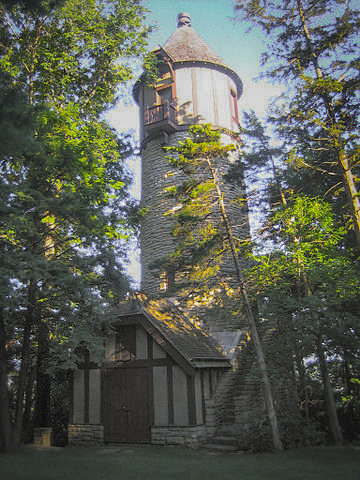
For instance, a few weeks ago, while a loved one underwent a long and intense surgery at one of the Mayo Clinic hospitals in Rochester, Minnesota, my wife and I decided to go for a walk. Whereas our feeling inside the hospital involved fear, agony, and dread, the simple act of getting into the sunlight and seeing the nearby trees brought us some calm. We eventually came across signs pointing us to the Plummer House – former home of Mayo partner and founder Dr. Henry Stanley Plummer – so we walked in that direction, ultimately finding the breathtaking English Tudor mansion. We explored the grounds but came to a stop, transfixed, at one of the most unusual buildings we’d ever seen – actually the old water tower for the mansion – but which my wife and I referred to as “Rapunzel’s Tower.” The architecture of the tower truly “blew our minds” for what was possible with a building, and we were lifted out of our troubles for just a moment. When our attention came back to ourselves and the situation at hand, we returned with greater clarity, strength, and connection to face the difficulties to come. 

Watertower at Plummer House, Rochester, Minnesota

In a recent article, six studies demonstrated how awe experiences diminish feelings of stress. For instance, in one study, participants were brought to the top of a 200-foot clock tower on the campus of the University of California at Berkeley. Half were randomly assigned to the awe condition, which involved gazing out the tower upon the Bay, San Francisco, and the Golden Gate Bridge; the other half were randomly assigned to a control condition, which involved gazing upon the inside of the tower. Although both groups experienced less stress associated with the hassles they reported having than before being brought to the tower (consistent with research showing the stress benefits of taking a walk outside), individuals in the awe condition, in particular, experienced greater reductions in stress, compared with individuals in the control condition. In part because of this, participants in the awe condition also reported higher satisfaction with their lives.

Why does awe decrease stress? Based on their results, the researchers suggested that:

Continue reading

Awe Decreases Political Polarization

As my wife and I walked from the front doors to the worship center of the exponentially growing church we used to attend in the mid-1990s, we often remarked how much relational tension filled the hallways. Young couples frequently walked together in silence, their faces sometimes providing brief glimpses of the irritation they felt toward each other. Moms and dads regularly yelled at kids to get them to Sunday school. Friends and acquaintances mostly kept to themselves.    

People had good reason for waking up early on a Sunday morning to pack the auditorium. The young preacher challenged us with mind-stretching insights that directly applied to our lives. The band led us into worship experiences that connected us with God in ways that melted our selves into something larger.

During these times of shared praise, in particular, emotion poured out of many. I often cried during songs, for example, tears pouring down my face. Sometimes, I’d be unable to continue singing, in fact, feeling so “choked up.” There were even a few times when I felt so overwhelmed I had to physically brace myself with the chair in front of me because I was literally “weak in the knees.”

When we left the worship space, my wife and I frequently commented how those around us seemed palpably different than when they arrived. Not everything was perfect, of course, but tension had lifted. Young couples looked more in love, holding hands on their way out the door. Families played. Others welcomed conversation over coffee and donuts.

If this had been a one-time occurrence, I may not have thought much of it. But, it was so predictable, it was almost comical. Pretty much every week, the same basic story unfolded: people were being transformed.

Maybe the most notable observation we made, though, at least in retrospect, occurred when we left the church building and walked back to our car. The parking lot typically was much fuller than when we arrived, and we often were struck by the range of political bumper stickers. Frequently, we’d see people part ways in the parking lot with a handshake or hug, only to enter cars with stickers suggesting different political affiliations.

As a young Ph.D. student studying Psychology at the University of Minnesota at the time, I wondered: what might help account for the powerful positive effects we were observing? Nothing in psychological science seemed capable of providing a good explanation.

Continue reading

To Dust I Shall Return

“The source of all sorrow is the illusion that of ourselves we are anything but dust.” (Thomas Merton)

On this Ash Wednesday – in the middle of a pandemic, where COVID deaths in the United States now easily surpass the number of American deaths in World War II – Merton’s words ring particulalry true. I don’t remember a year where my soul has been more ready for the 40+ day season of intentional contemplation that is Lent.

Remembering today that I am made of dust – and to dust I shall return – reminds me how often I cling to earthy attachments, and how this brings with it great suffering. The admonition of St. Ignatius to “hold things lightly” also comes to mind.

My tendency is to skip past Ash Wednesday, to quickly divert myself to my longing for more, for hope, for Easter. This year, I’d rather learn to sit in the tension, in the reality of hardship, to not push these feelings away, and to realize this is a vital part of being human as well.

The Emotional Benefits of Exercising Outdoors in Winter

Before this year, from December to March, I spent most of my adult life inside. During these months in Minnesota, where I live, high temperatures typically remain below freezing, and it’s not uncommon to wake up to a reading of below 0 degrees Fahrenheit, not counting “wind chill.”

Although I intentionally exercised several times per week, much of this time in previous years was passed in my gym where I watched old episodes of Friends while artificially bounding on an elliptical machine. This felt easier. When I considered going outside, images came to mind of my whole body shivering uncontrollably, my face becoming numb, my fingers and toes feeling like they might be seriously frostbitten, my nostril hairs freezing as I breathed in the cold, dry air.

With COVID-19 cases surging as we entered the winter months this year, I faced a clear choice: (1) continue the comfortable routine of previous years by working out inside my gym, knowing this would mean I would more likely contract and spread the virus, or (2) extend my summer and fall habits of exercising in the great outdoors. Favoring public health, I decided on the latter: I put my gym membership on temporary hold, and with some trepidation, I planned for a winter of outdoor adventure.  

I’m now a few months into this new lifestyle. Some days, I walk or hike on paths near my home, aided by the most marvelous invention I never knew to keep myself from falling on the snow and ice: Yaktrax. Other days, when I have more flexibility in my schedule, I practice my classic ski technique at a local park or snowshoe along the pine tree-lined trails of my favorite local nature center. Weekends provide opportunities for more extended travel or adventure, such as half-day trips to formerly unexplored or underexplored Minnesota State Parks.

A few insights have been essential to making this work. First, I have new appreciation for the Scandinavian saying: “there’s no such thing as bad temperature, only bad clothing.” Although it was an investment, purchasing high-quality outdoor clothing from REI has been well worth it in terms of comfort in the cold. (There is a point where I “draw the line,” though, and for me that’s 0 degrees Fahrenheit, below which I move my body inside.) Most importantly, I’ve needed to shift my attitude toward winter. Inspired by recent psychological research by University of California – San Francisco researcher Virginia Sturm and colleagues – showing increased positive emotions and decreased emotional distress when individuals engage in regular “awe walks” – I’ve changed my focus from efficiency in exercise to getting lost in wonder as I look for what is vast, unexpected, and unique outside. If the conditions are right, I’ll also sometimes bring my camera to see if I can photograph some of the beauty around me.

Carpenter Nature Center, Hastings, Minnesota
Continue reading