Category Archives: Christianity

Armistice Day

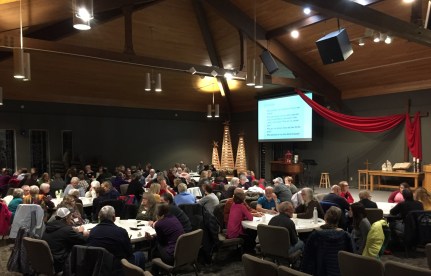
A few weeks ago, I attender a Quaker memorial service for a friend named Gary. Unfortunately, I didn’t get to know Gary as well as I would have liked before his unexpected death, but that made the service all the more thought-provoking.

One thing I learned about Gary was that he was serious about following the Quaker Christian testimony of peace. Key to this testimony is Jesus’s teaching in the Sermon on the Mount: “Blessed are the peacemakers, for they will be called children of God” (Matthew 5:9). Gary wanted to serve his country so, when he was young, he enlisted in the Coast Guard, the branch of the American military known to be least violent and most about peacemaking. After his time of service, he joined an organization called Veterans for Peace, a group I had sadly never heard about.

Veterans for Peace sent a representative to Gary’s memorial service and made two major points, neither of which I had ever considered. First, rather than offering a typical 21-gun salute – which they believed glorified violence – this representative rang a bell, signifying the hope for peace (and moving most of those in attendance to tears). Second, the representative for Veterans for Peace noted the shift in our country from celebrating Armistice Day to celebrating Veteran’s Day, something others apparently have discussed often – sometimes with considerable frustration – but which I had been completely ignorant about.

Without going into great detail, Armistice Day was created to celebrate and commit to ongoing peace after the end of World War I. After the Korean War, the day was changed to celebrate all Veterans – and not just those veterans who served in World War I or World War II – which obviously makes sense. However, in doing so, as some have argued, the shift became more about the glorification of war; the celebration of peace was lost.

Today, with so many others, I celebrate all Veterans, including those in my family such as my dad who put himself in harm’s way to combat evil. I am thankful for this service, just as I am also grateful for the service of many others who serve our country in often unrecognized ways (such as public school teachers, just to name one example).

At the same time, I remember the original intent of Armistice Day. I pray for a day when war is no longer necessary, when men and women in the prime of their lives do not have to be deployed and put in harm’s way. I pray for those who have been hurt physically, emotionally, and spiritually because of violence. I reflect on which of my actions plant the seeds for further war. And what habits I might nurture in myself and others to plant seeds for peace instead.
The Meaning of the Cross

Last week, my family and I returned from 9 days of touring France, including 6 days in Paris and 3 days in Normandy (click here for my updated photography page). Part of our interest in this trip was a sort of pilgrimage to visit the American cemetery near Omaha Beach, where thousands of Americans died on D-Day. In preparation, before we left, we watched the horrific opening scenes of Saving Private Ryan, to get more of a sense for what happened on that epic day.

I don’t cry very often, but when I surveyed 9,388 crosses and stars of David at the American cemetery, I wept. I replayed in my imagination what happened at this site, and I connected with the sacrifice made on our country’s behalf. Watching filmed testimonies at Pointe du Hoc only reinforced this, as survivors recounted what it was like going into this day, how young most everyone was, and how afraid.

Many talked about how they prayed, and how they felt like their ultimate sacrifice – though tragic – might be needed: for God and country.


This slideshow requires JavaScript.

Continue reading

Gays and the Church

Although the Supreme Court’s landmark 2015 ruling in Obergefell vs. Hodges seemed to settle many civil issues about same-sex marriage in the United States, the topic remains contentious in many religious communities. In recent years, some denominations have broken with the historical Christian view that same-sex relations “miss the mark” and have become more LGBTQ affirming. Many have not, however, meaning they will not support “unrepentant” same sex sexual behavior or same-sex marriage in their churches.

From February 23-26, 2019, another major denomination will meet to discuss its official stance about same-sex relations, as leaders in the United Methodist Church will convene in St. Louis, Missouri to discuss “a way forward.” The plan recommended by the Methodist Council of Bishops would allow local decision-makers to implement policies about matters such as same-sex marriage that best fit their social contexts. If approved, this would enable more progressive districts to support the ordination of gay and lesbian Pastors and marry same-sex couples, subject to the conscience of the local pastor, while allowing more conservative districts to remain unchanged in policy and practice.

At play in these deliberations are questions of how to know what is true about matters of faith. The founder of the Methodist tradition – John Wesley – proposed four “ways of knowing,” now organized in what is popularly termed the “Wesleyan Quadrilateral:” experience, reason, tradition, and Scripture. Basically, Methodists look for “converging evidence” in these four domains when creating church policy, although Scripture is prioritized.

Gays_2In anticipation of the denomination’s upcoming meetings, I have led a discussion group at my local Methodist church exploring same-sex relations, using the Wesleyan Quadrilateral as an organizing tool, for the past six weeks. Members of my church community have discussed their experiences with gays and lesbians, we invited several gay Christians to our group to listen and learn from their stories, and we have explored Scripture from both conservative and progressive perspectives. As a facilitator, my charge was to lead this group neutrally, meaning I have not shared my opinion very often, I have tried to make sure the best of materials are shared from both conservative and progressive viewpoints, and I have sought to create an atmosphere that is hospitable and conducive to honest, respectful conversations among individuals who often disagree.

Continue reading

My Journey with the Bible

I’ve written some personal essays before – these on death and the relationship between science and faith are examples – but below is maybe the most personal essay I’ve ever written. It technically is a narrative essay – focusing on my lifelong experience with the Bible – and I developed it through the help of some amazing folks at the Loft Literary Center in Minneapolis. Our teacher at the Loft encouraged us students to submit our work to literary publications, and I sent mine to a very cool Christian literary magazine called Ruminate. I was so honored when they accepted!

Anyway, here it is. I’d love to hear your reaction.

My Journey with the Bible


When Religion Promotes Violence

In a survey released last week by U. S. News and World Report, over 21,000 people from all regions of the world most commonly rated religion as the “primary source of global conflict today.” Individuals identified power, economic factors, and political beliefs less frequently.

Of course, the fact that survey respondents believe religion drives global conflict more than any other factor doesn’t mean it actually does. However, the survey does raise questions of how religion may contribute to conflict and what could be done in religions to better promote peace.

Continue reading

Quaker Quotes

Several years ago, a student of mine shared with me an online survey to determine my religion: the “belief-o-matic.” According to my results, I apparently am “Orthodox Quaker.” This piqued my interest, especially since I knew nothing about Quakers and had never attended a Quaker meeting!

41WDN00GgIL._SX331_BO1,204,203,200_

Recently, I started doing some reading about Quakerism. One element of this tradition that I love is the emphasis on quotations. There are some really lovely quotes I’ve found in Quaker tradition, but – following the Quaker testimony of simplicity – I’ll only share a few here. From this tradition, quotes are not merely nice little axioms; rather, they are intended to be prompts for contemplation. Most of these I found through two books, both by Catherine Whitmire.

“So here is my little nugget of gospel truth for you to take home.
The truth is not that it is going to be alright.
the truth is, it already is.” (Fredric Evans)

Continue reading

Christian Wiman’s Thoughts on Faith

In his op-ed, “The Subtle Sensations of Faith,” David Brooks calls “My Bright Abyss: Meditation of a Modern Believer,” “the best modern book on belief.” The author, Christian Wiman, has struggled – for many years – with a rare form of cancer, and he lays bare many of his rawest thoughts in this book about many aspects of meaningful living, particularly in relation to faith. I think the best way to give a quick glimpse is to share a few select passages.

***

“No one ever believed in God without perceiving God.”

“To say that one must live in uncertainty doesn’t begin to get at the tenuous, precarious nature of faith. The minute you begin to speak with certitude about God, he is gone. We praise people for having strong faith, but strength is only one part of that physical metaphor: one also needs flexibility.”

Continue reading

The Psychology of Religion

One of my first memories happened at church. We always seemed to arrive early enough to say the rosery, but this one particular Sunday morning, my mom, brother, and I were late. We double-timed it up the concrete stairs to heave open the austere metal doors of the traditional red brick Catholic church only to find the sanctuary doors to be closed. It seemed we were not allowed entry because of our tardiness, so we were confined to a small, cold foyer filled with nothing to look at but posted advertisements for local businesses and two holy water stations. Being only 4 at the time, I quickly became bored. A hymn had started, and I snuck a peak through the closed passageway. The congregation was being led in song: “Here I am, Lord! Is it I, Lord? I have heard You calling in the night! I will go, Lord, if You lead me!…” Powerful words, I thought, and yet I observed no sign of emotion among anyone in the church. Much of the congregation didn’t even sing along.

The fact that I so clearly remember this incident reveals something about my strong religious and spiritual inclination. But the incident also raised a question for me that has become the focal point for much of my professional life: What explains why some people are more religious than others?

Continue reading

Religious and Spiritual Struggle During Adversity

Marian Fontana was living a good life. She had been happily married to her husband, Dave, for 17 years, with whom she had a young son. Marian had frequent “conversations with God,” as she put it. As a normal part of her daily life, she would thank God for all that was going well and ask God to bless others in need.

Then came September 11th, 2001.

When Marian saw the World Trade Center crumble on television, she knew her life was crumbling as well. Dave was a New York firefighter who was called to the scene. After sensing his death, her initial response was to wander into every church in her neighborhood to pray and pray and pray for Dave’s life. But, this prayer was to go unanswered.

After several months of total grief, Marian started to see beauty again. However, her spiritual life was different. As she stated in the PBS documentary, “Faith and Doubt at Ground Zero:”

“I couldn’t believe that this God that I’d talked to in my own way for 35 years could… turn this loving man into bones. And I guess that’s when I felt that my faith was so weakened… My conversations with God that I used to have, I don’t have anymore… Now I can’t bring myself to speak to Him… because I feel so abandoned…”

Years later, Marian is doing better. She has written a memoir about her experience (“A Widow’s Walk”), and she reports being less angry. Yet, as she said in a live chat organized by PBS 10 years after Dave’s death, “[I] still don’t have conversations with God the way I used to.”

Continue reading

Longing for More

What do you really want in life?

It’s a difficult question, but it may be the essential question.

Maybe you would answer with a concrete response, such as “I want sleep,” “I want a new phone,” or “I want to play more golf.”

Or maybe you would reflect more broadly. Some people even go beyond everyday desires to imagine deep yearnings for something more.

Source Sehnsucht (c. 1900). Heinrich Vogeler Wikimedia Commons

Source: Sehnsucht (c. 1900). Heinrich Vogeler / Wikimedia Commons

“Sehnsucht” is a popular German word with no simple English translation (click here for pronunciation). C. S. Lewis often relied on this concept in his writings, defining it as “inconsolable longing” for “we know not what.” Instead of “wishful thinking,” Lewis suggested how Sehnsucht involves “thoughtful wishing.” In my words, Sehnsucht has to do with an intense desire for something beyond our human capacity to fulfill. It is a sense that something is missing – something that, if fulfilled, would make everything complete.

To better understand, let’s consider some of the ways Lewis reflected on the concept.

In his “Chronicles of Narnia” series, Lewis states:

“Perhaps it has sometimes happened to you in a dream that someone says something which you don’t understand but in the dream it feels as if it had some enormous meaning… a lovely meaning too lovely to put into words, which makes the dream so beautiful that you remember it all your life and always are wishing you could get into that dream again.”

Continue reading